Work With an HVAC Specialist to Protect Cash Flow
Learn about HVAC Specialist for real estate investing.
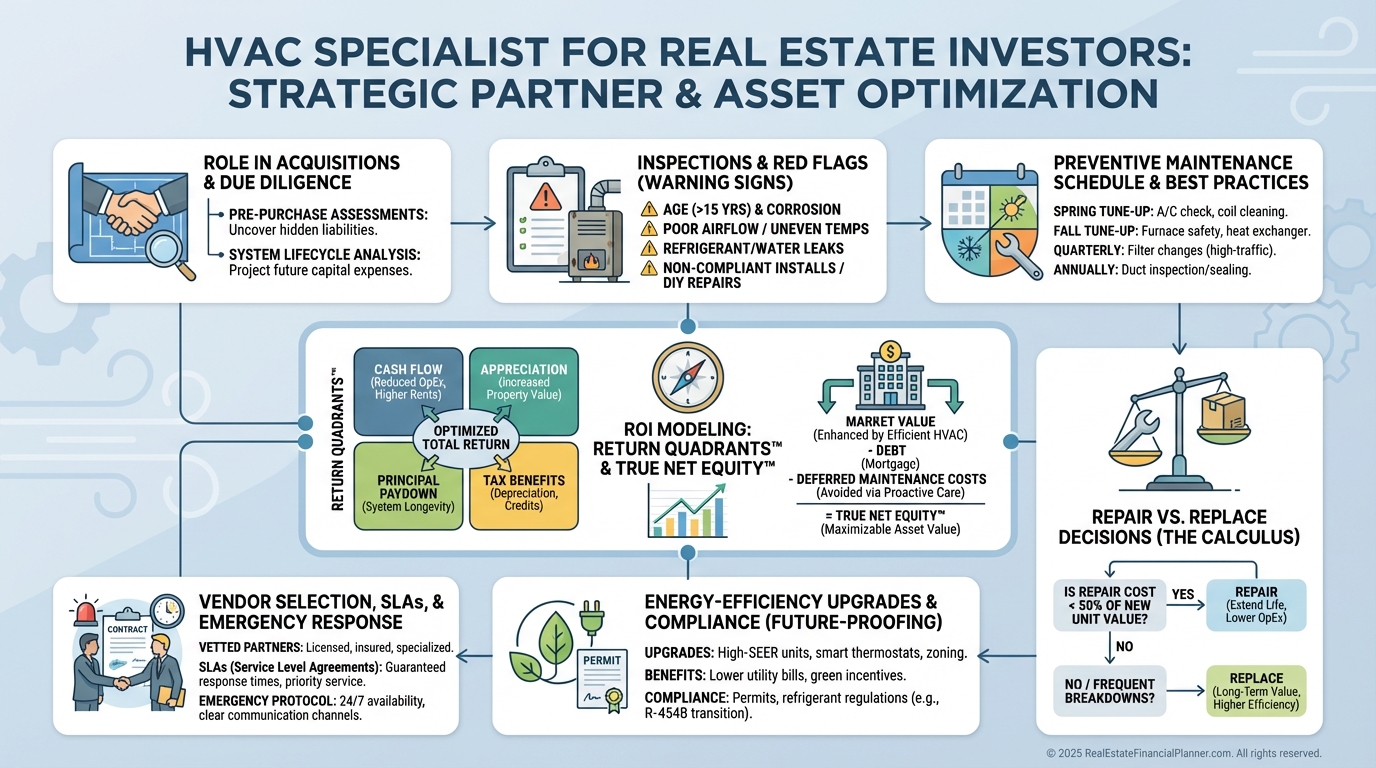
Why Your HVAC Specialist Is One of the First Five People on Your Team
When I help clients assemble their dream team, an HVAC specialist is non-negotiable.
They protect comfort, compliance, and cash flow—the three C’s that stabilize your portfolio.
A reliable tech shortens vacancy, prevents emergency spending, and helps you plan capital with confidence.
That’s how you preserve True Net Equity™ and smooth your Return Quadrants™.
What an HVAC Specialist Actually Does for Investors
They install, maintain, and repair heating, ventilation, and air conditioning systems.
They also audit energy efficiency, optimize airflow and ductwork, and advise on upgrades that lower operating costs.
On my projects, I lean on them for load calculations, code compliance, and honest repair-vs-replace guidance.
When they document everything with photos, serial numbers, and static pressure readings, I sleep better.
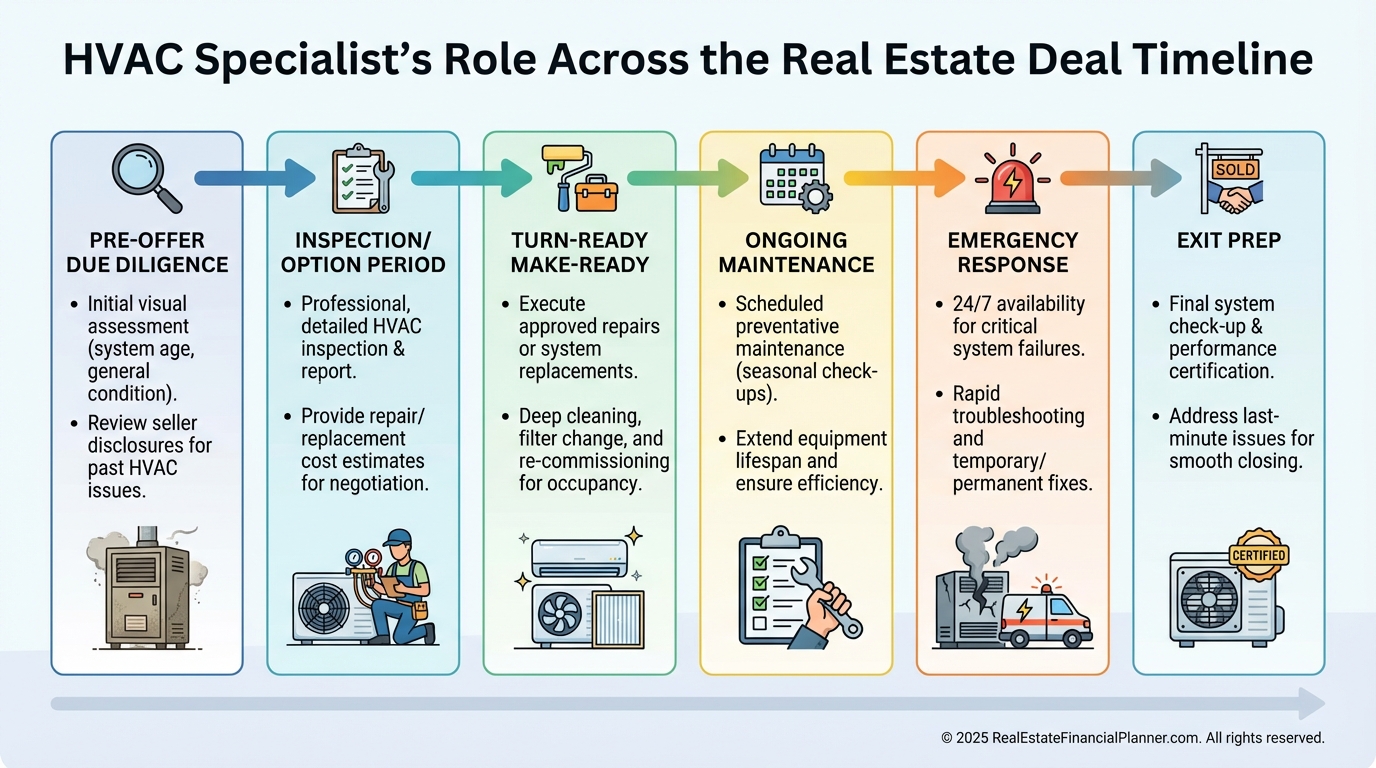
Where They Fit in Your Deal Timeline
Before you offer, they help estimate remaining useful life and capex.
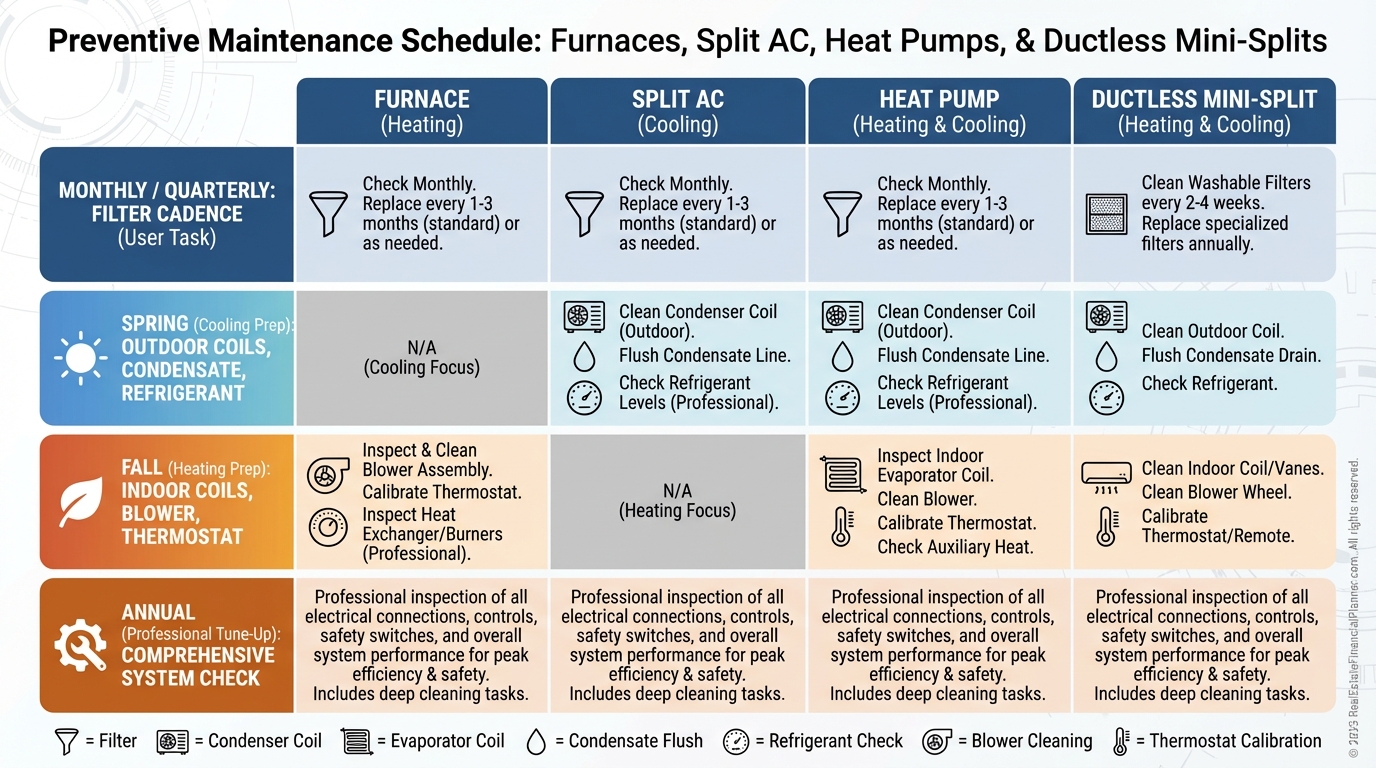
During inspection, they verify system age, refrigerant type, duct integrity, and safety.
At turns, they tune, clean, and bring systems to spec for marketing photos and showings.
During operations, they handle routine maintenance, seasonal checks, and fast repairs.
Before sale, they help you document recent work to justify price and reduce buyer objections.
What I Model Before I Buy
I model three numbers: remaining useful life, current efficiency, and replacement cost.
Then I translate those into reserves and timing to see if my cash flow still holds.
If I inherit a 19-year-old furnace, I set a near-term replacement reserve and adjust my Return Quadrants™.
If refrigerant is R-22, I plan replacement sooner due to cost and availability.
I also model the rent and vacancy impact of a system that can’t keep up in peak weather.
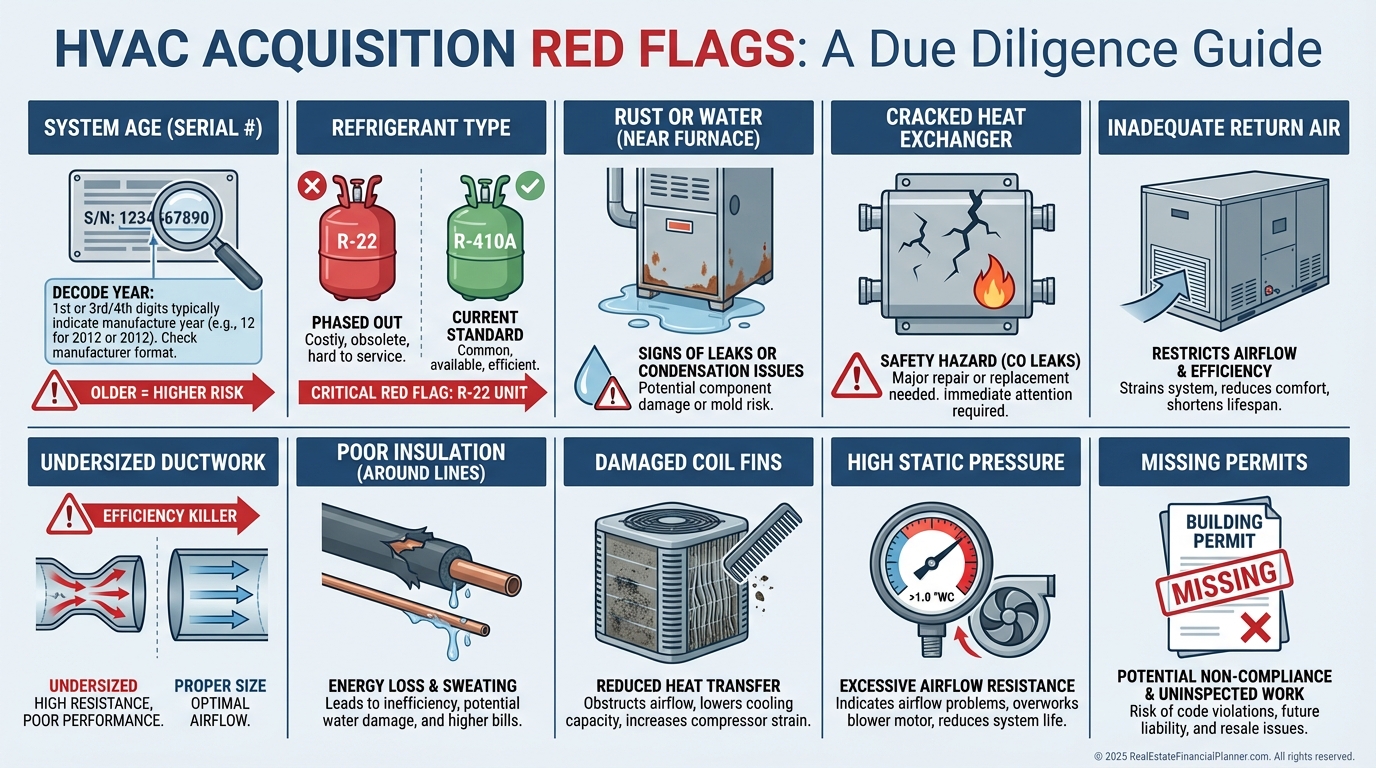
Maintenance That Protects NOI
Preventive maintenance is cheaper than vacancy and emergency calls.
I require spring cooling and fall heating tune-ups across the portfolio.
We change filters on a set cadence, clean coils, test static pressure, and calibrate thermostats.
I ask for photos, delta-T readings, and written notes, so I can track trends over time.
Small fixes now prevent big failures later.
Upgrades, Efficiency, and Tenant Experience
Tenants renew when the home stays comfortable in heat waves and cold snaps.
Upgrading to efficient heat pumps, adding smart thermostats, and sealing ducts often reduces utility costs and noise.
When owners pay utilities, this boosts cash flow directly.
When tenants pay, comfort and lower bills boost demand, reduce days on market, and support small rent premiums.
I ask my HVAC specialist to provide a side-by-side: current SEER/HSPF vs. proposed, expected kWh savings, and any rebates.
Repair vs. Replace: A Decision Framework
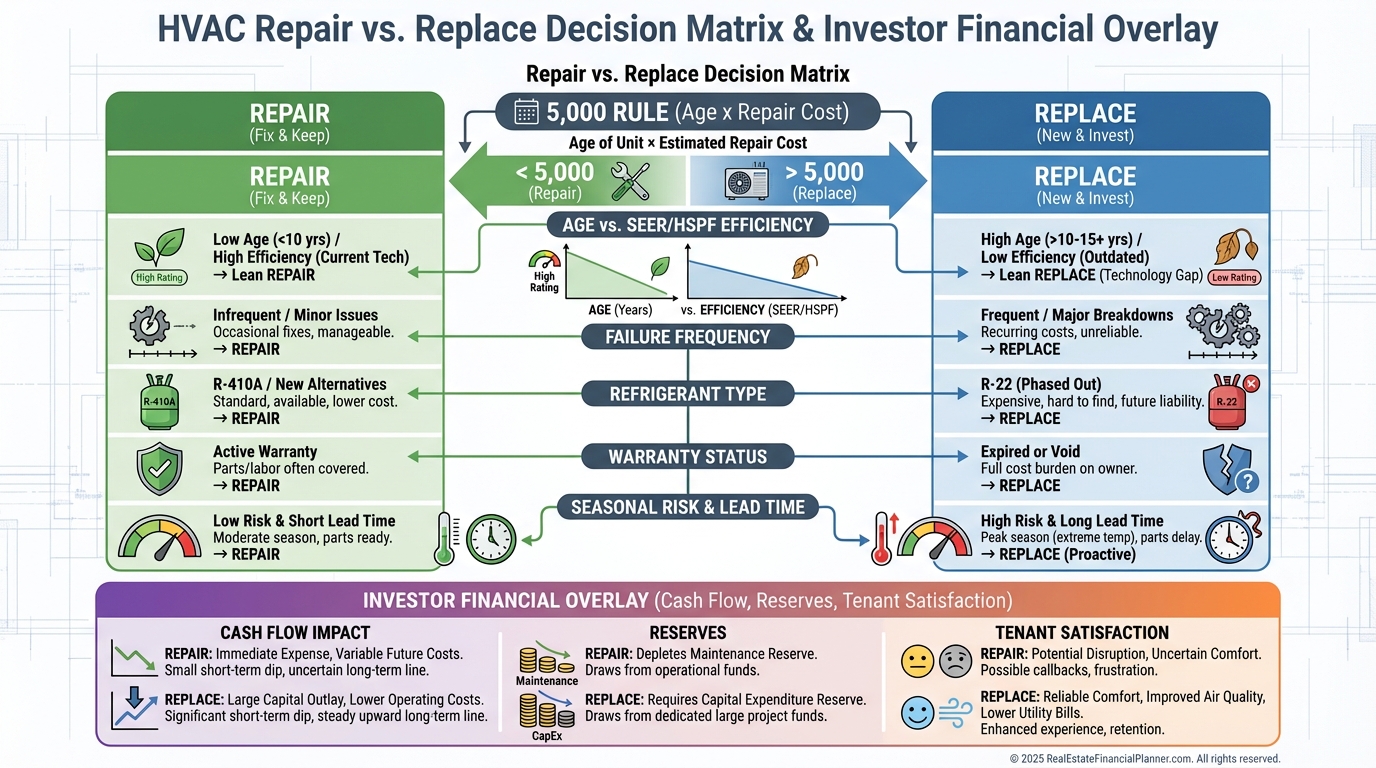
We use the “5,000 rule” as a starting point: repair cost times system age over 5,000? Replace.
But investors need more context.
I also compare seasonal failure risk, lead time for parts, and the chance of a no-heat/no-cool call during peak season.
Then I rerun cash flow, reserves, and depreciation to see which path protects True Net Equity™.
We also consider comfort reputation—fewer complaints mean fewer turnovers.
Compliance and Risk Management
I insist on permits and Manual J/S/D calculations for replacements.
We verify combustion air, venting, and CO detector placement.
EPA 608 certification is a must for refrigerant handling.
I request insurer certificates naming my entity, W-9s, lien releases, and model/serial documentation for the file.
Cutting corners here risks safety, fines, and failed resales.
Contracts, Pricing, and SLAs
My maintenance contracts spell out response times, after-hours rates, and photo documentation.
They include seasonal tune-ups, filter logistics, and pricing for common repairs.
I want parts and labor warranty terms in writing, plus who handles manufacturer claims.
For multifamily, I price per-rooftop or per-door to simplify budgeting.
When I rebuilt after bankruptcy, clarity in SLAs is how I tamed surprise expenses.
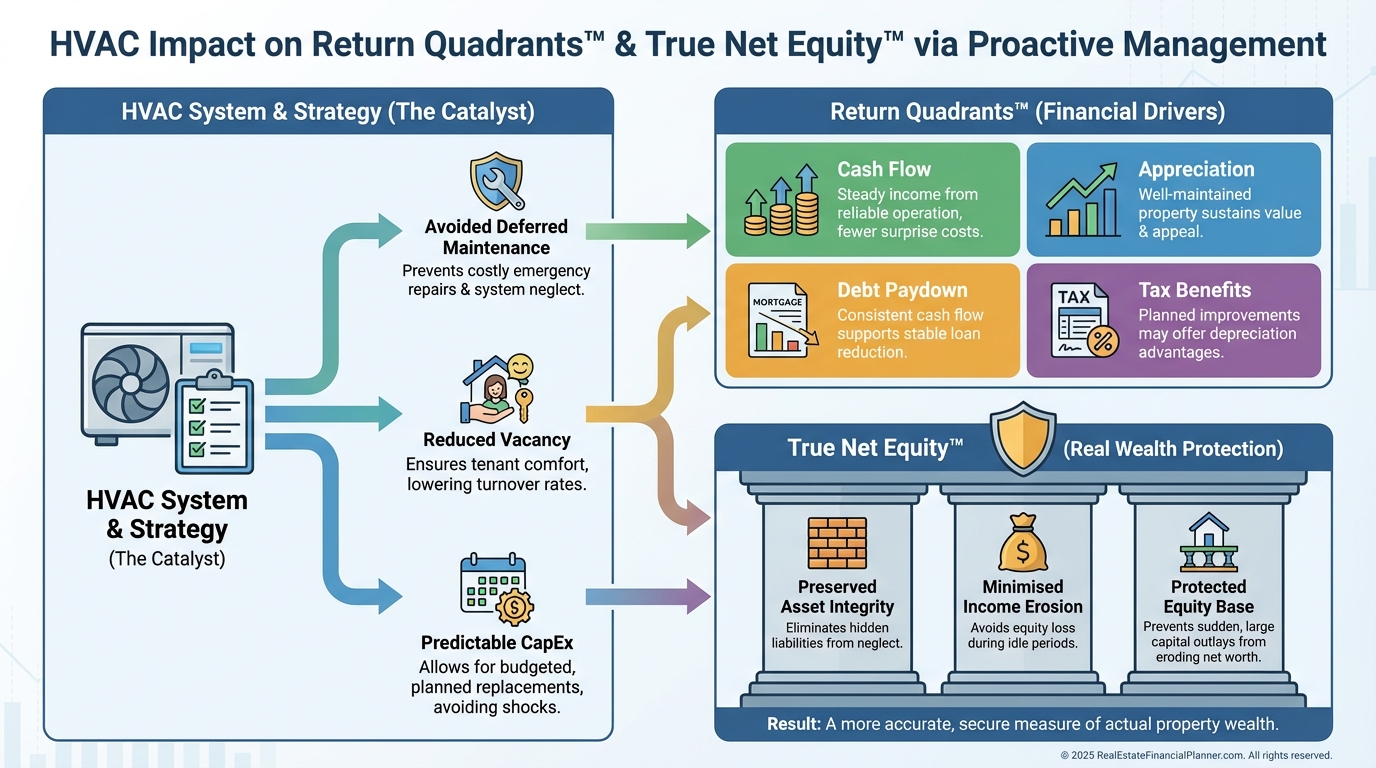
How HVAC Impacts Your Return Quadrants™
Appreciation: efficient, comfortable homes rent faster, support higher rents, and show better at sale.
Debt Paydown: unaffected directly, but steadier cash flow keeps amortization on track.
True Net Equity™ improves when you avoid deferred maintenance discounts and emergency premium pricing.
The Nomad™ Angle
If you plan to owner-occupy first, upgrade comfort and efficiency while you’re there.
Take advantage of utility rebates and meticulous commissioning, then place the property as a rental with lower operating costs.
The first-year comfort you enjoy becomes the durability your future tenant appreciates.
That’s how Nomad™ investors set up long-term wins.
Building Your Bench: Selecting the Right HVAC Specialist
I start with three bids, but I’m not shopping the cheapest.
I vet for licensing, insurance, EPA 608, and real load calcs.
I test new vendors with a maintenance call before handing them a replacement.
I want techs who educate, not upsell.
Clear photos, serials, static pressure, and delta-T on every ticket are my quality tells.
Emergency Playbook for Peak Season
When a system fails in July or January, minutes matter.
My SOP triggers immediate triage, tenant communication, and portable comfort units if needed.
If repair parts are delayed, I compare temporary cooling/heating costs against early replacement.
I document every touch and keep timestamps in case of habitability claims.
Speed, clarity, and alternatives reduce refunds and reviews.
Common Mistakes I Warn Clients About
Skipping pre-offer HVAC checks and “hoping” it lasts one more year.
Letting tenants change filters “whenever.”
Ignoring duct leaks and static pressure.
Replacing without permits or load calcs.
Failing to model the rent and vacancy impact of poor comfort.
These are portfolio-level leaks. Your HVAC specialist helps you plug them.
Quick Checklist to Implement This Week
Audit system ages and refrigerant types across your properties.
Set spring/fall tune-ups and a filter replacement plan.
Standardize repair-vs-replace thresholds with your vendor.
Collect permits, model/serial logs, and warranty docs in one folder per property.
Update your REFP model with reserves and timing for HVAC capex.
That’s how you turn a vulnerability into an advantage.