Negative Cash Flow in Real Estate: Causes & Solutions
Learn about Negative Cash Flow for real estate investing.
Why Investors Fear Negative Cash Flow
Negative cash flow triggers a visceral “no” for most investors, and I understand why.
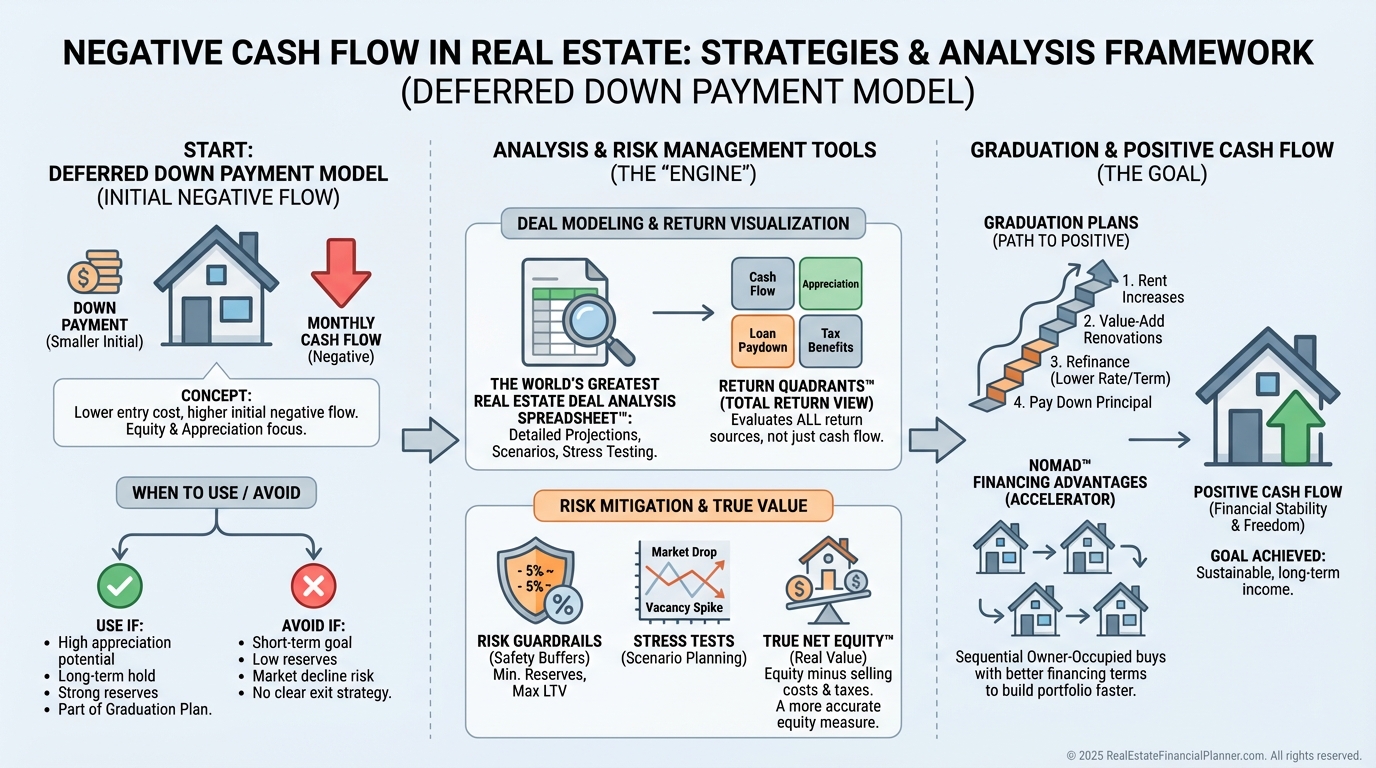
When I help clients, I start by reframing it as a financing choice, not a failure.
The Core Reframe: The Deferred Down Payment
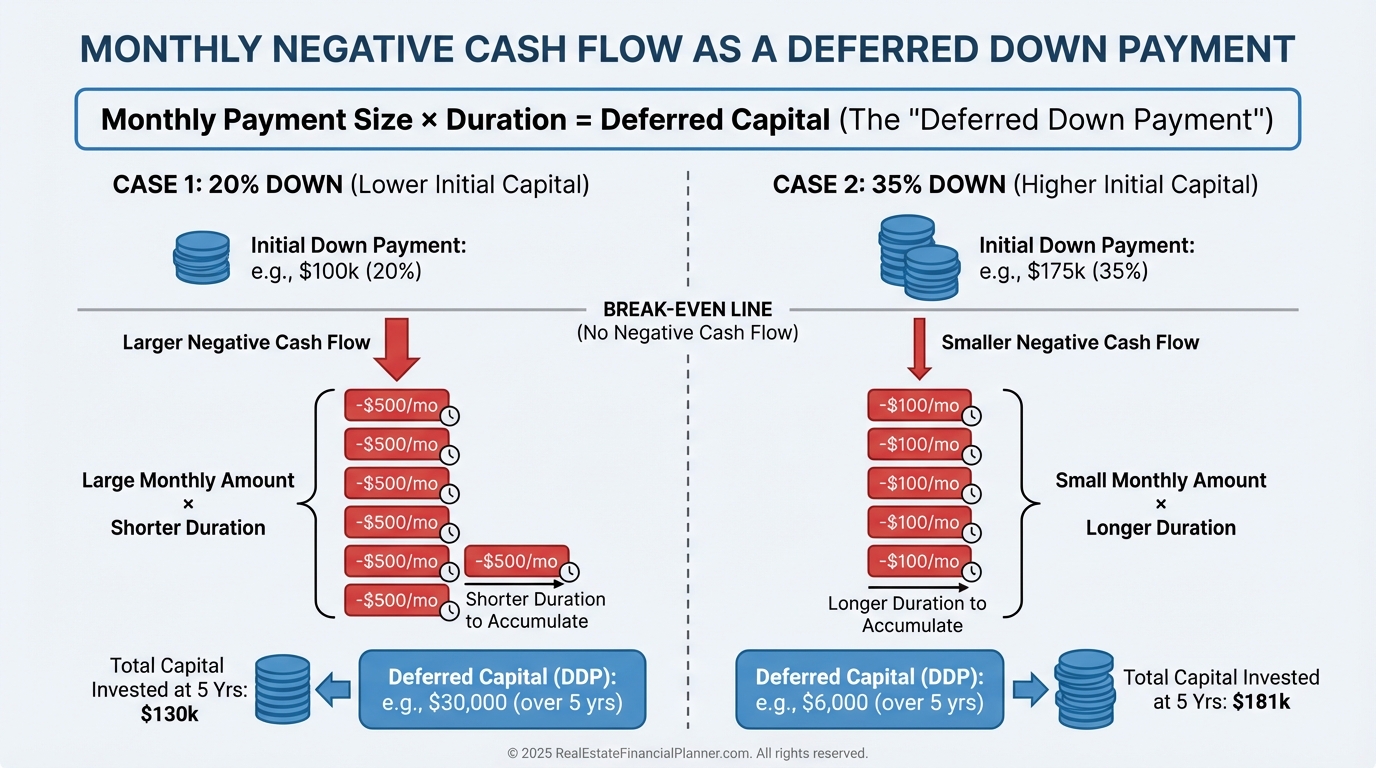
Here’s the lens that changes behavior fast: negative cash flow is a deferred down payment.
If you had put more down, you wouldn’t be writing a monthly check.
Let’s quantify it. On a $400,000 rental with $2,500 rent, 20% down may leave you at negative $300 per month after all expenses.
At 35% down, you’re likely positive. The “gap” is simply capital you chose not to put down upfront.
When I model this, I multiply the monthly shortfall by the months I expect the shortfall to persist.
That total is the deferred piece of the down payment, paid in installments.
Modeling It Right: Return Quadrants™ and True Net Equity™
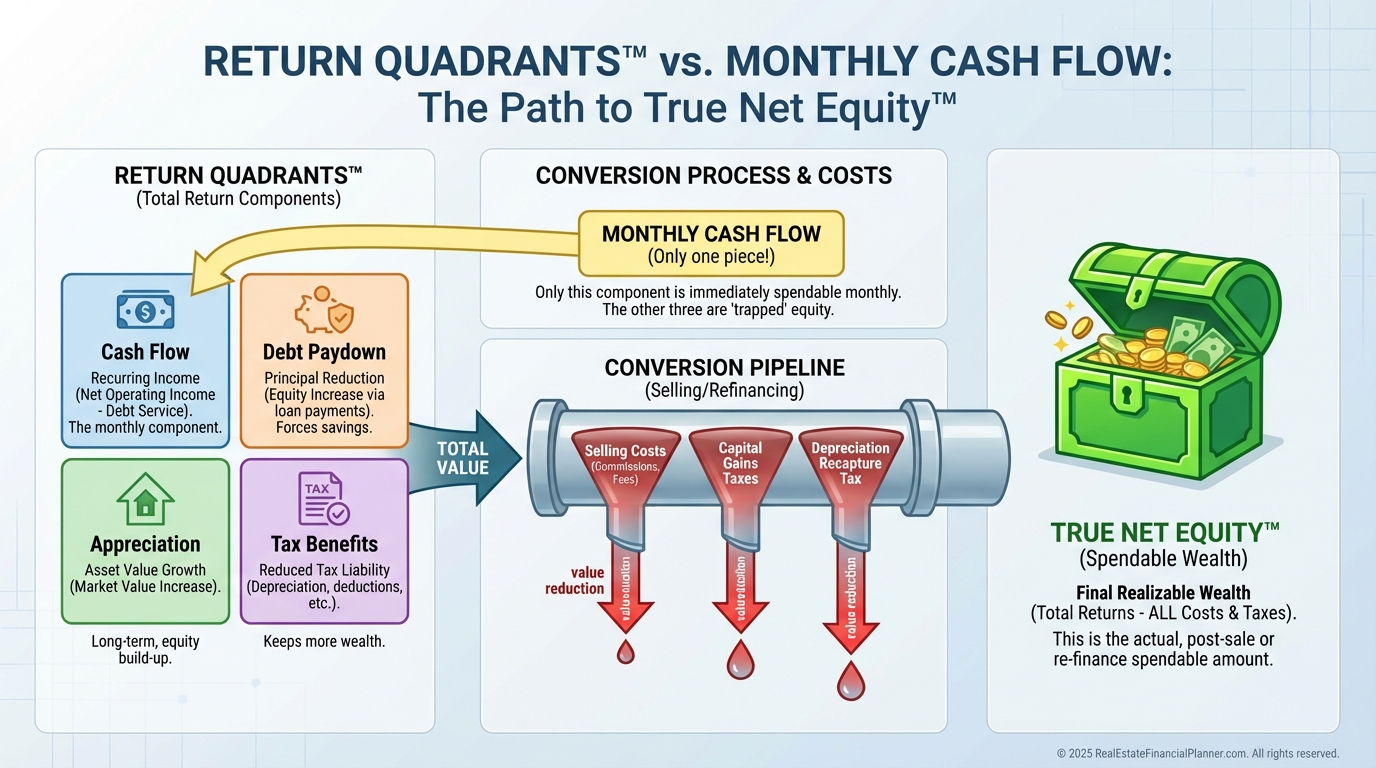
I never decide based on cash flow alone. I decide using Return Quadrants™: Cash Flow, Appreciation, Debt Paydown, and Tax Benefits.
Then I convert paper profit to reality with True Net Equity™ by subtracting selling costs and taxes to see what I could actually keep.
The World’s Greatest Real Estate Deal Analysis Spreadsheet™ lets me toggle down payment, rate, and rent to see which quadrant is doing the heavy lifting.
I also set a “cash flow neutral” point and measure how far below it I am, in dollars and time.
When Negative Cash Flow Can Be Smart
I accept strategic negative cash flow when another quadrant compensates with high confidence.
Here are the patterns I look for:
•
Appreciating submarkets with supply constraints and job growth
•
Clear value-add where rents increase upon completion
•
Ability to refinance to a lower rate within a reasonable window
•
Strong wage growth supporting future rent increases
•
Tax benefits that materially offset the monthly check (verified with a CPA)
•
Nomad™ house-hack variants that reduce payment and improve terms
When I rebuilt after a rough market cycle, I used negative cash flow on a duplex I could quickly reposition.
I forced rent growth with targeted improvements and refinanced once debt markets normalized.
When To Walk Away
I pass when investors are hoping, not modeling.
Avoid negative cash flow if:
•
You don’t have 12–18 months of the shortfall set aside
•
Your non-rental income won’t cover 3x the monthly deficit
•
The only thesis is “prices go up”
•
The portfolio is already over-leveraged
•
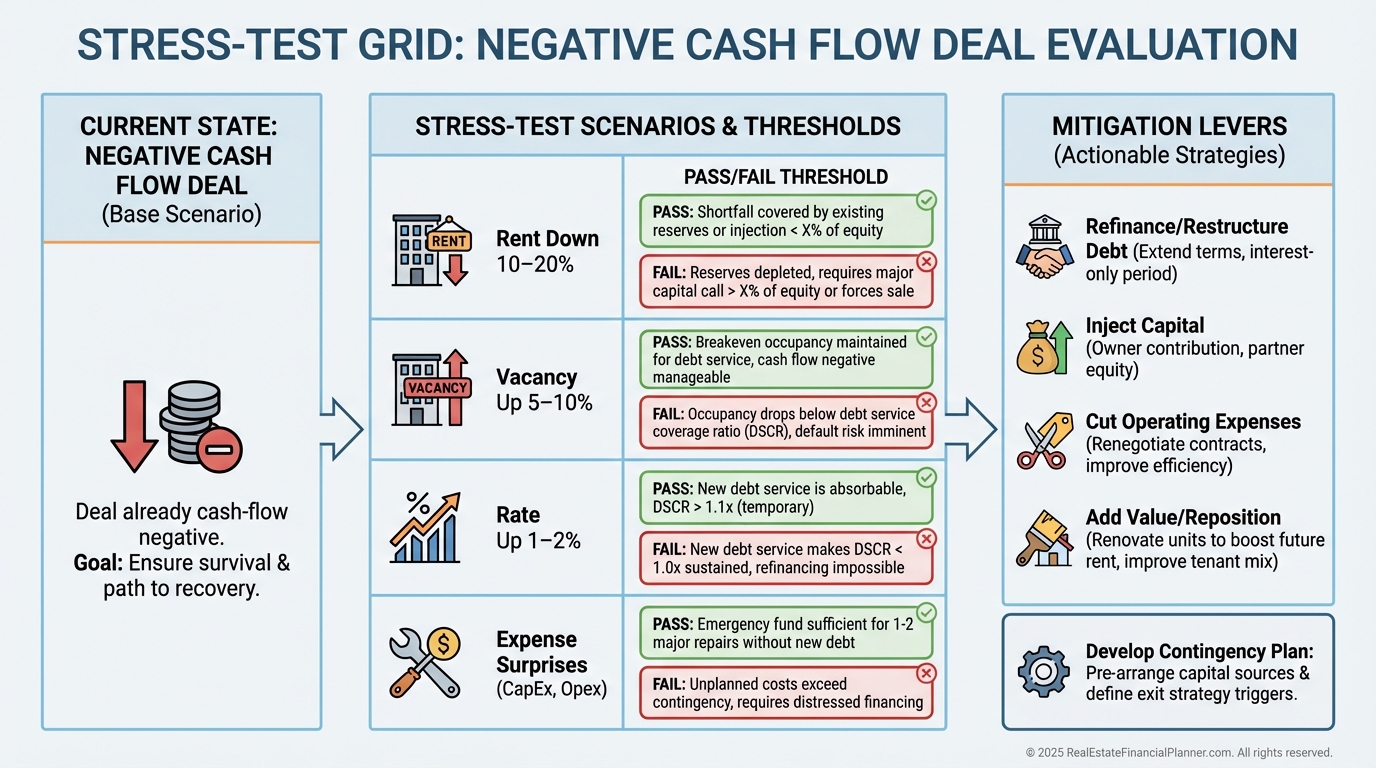
You won’t survive a 10% rent drop or a surprise big CapEx
When I see thin margins plus deferred maintenance, I recommend moving on fast.
The spreadsheet’s sensitivity tabs make that call objective.
The Mechanics: Why Negative Cash Flow Happens
Most shortfalls trace to a few inputs.
I check these first:
•
Payment too high for local rent ceiling
•
Taxes and insurance underestimated or trending up
•
Professional management not priced into the pro forma
•
Vacancy and turn costs under-modeled
•
HOA dues or utilities eating yield
•
Old systems creating maintenance drag
Fix the inputs, and you often fix the cash flow story.
If you can’t fix them, you need a better deal or a bigger down payment.
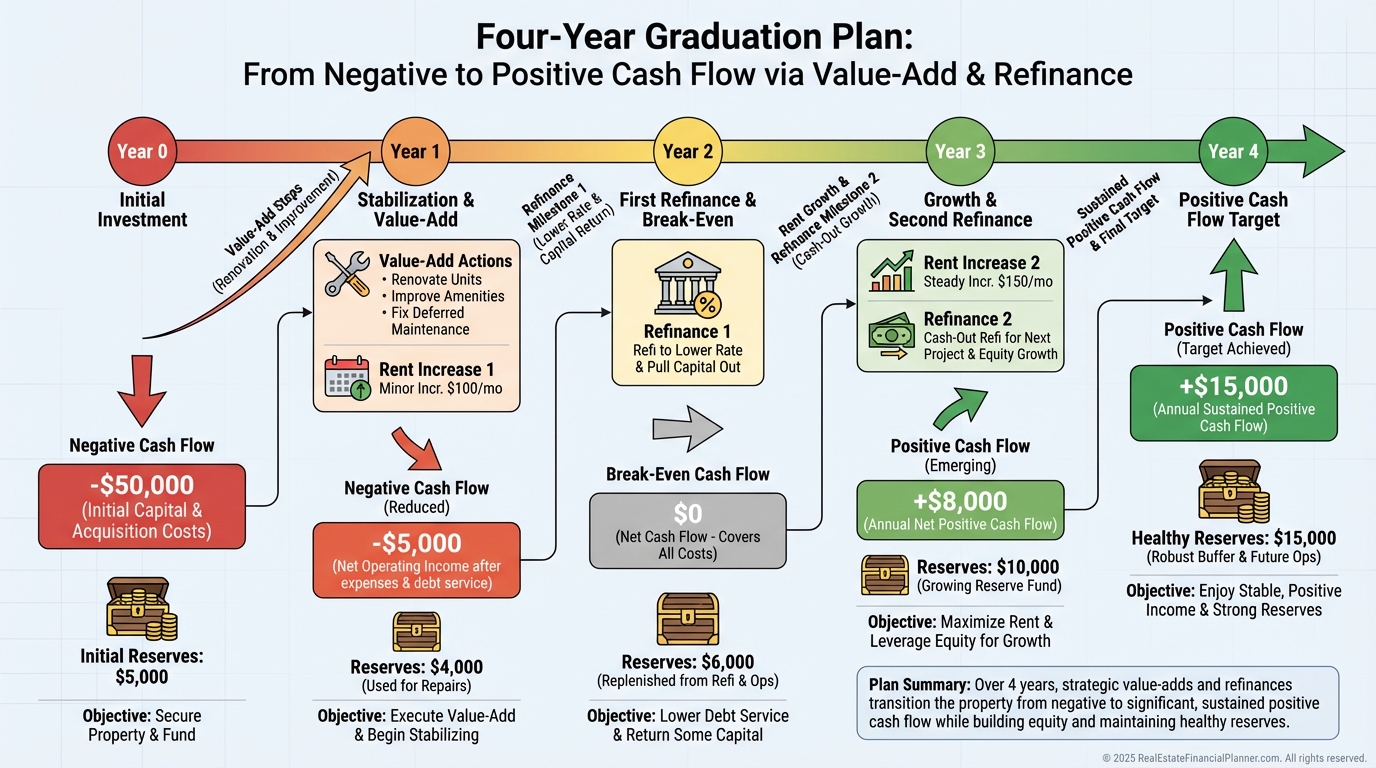
Managing The Drip: Turning Red To Black
A negative today can be a positive tomorrow if you plan the turn.
Here’s the “graduation plan” I map for clients:
•
Set aside 12–18 months of the deficit in a dedicated account before closing
•
Execute targeted improvements that justify rent increases
•
Implement planned annual rent bumps tied to market data
•
Watch the rate market and refinance thresholds
•
Explore short-term, mid-term, or by-the-room options if zoning allows
•
Optimize taxes with a real estate-savvy CPA
I track actuals vs pro forma monthly in The World’s Greatest Real Estate Deal Analysis Spreadsheet™ and adjust the plan, not my discipline.
Portfolio Guardrails: How Much Is Safe?
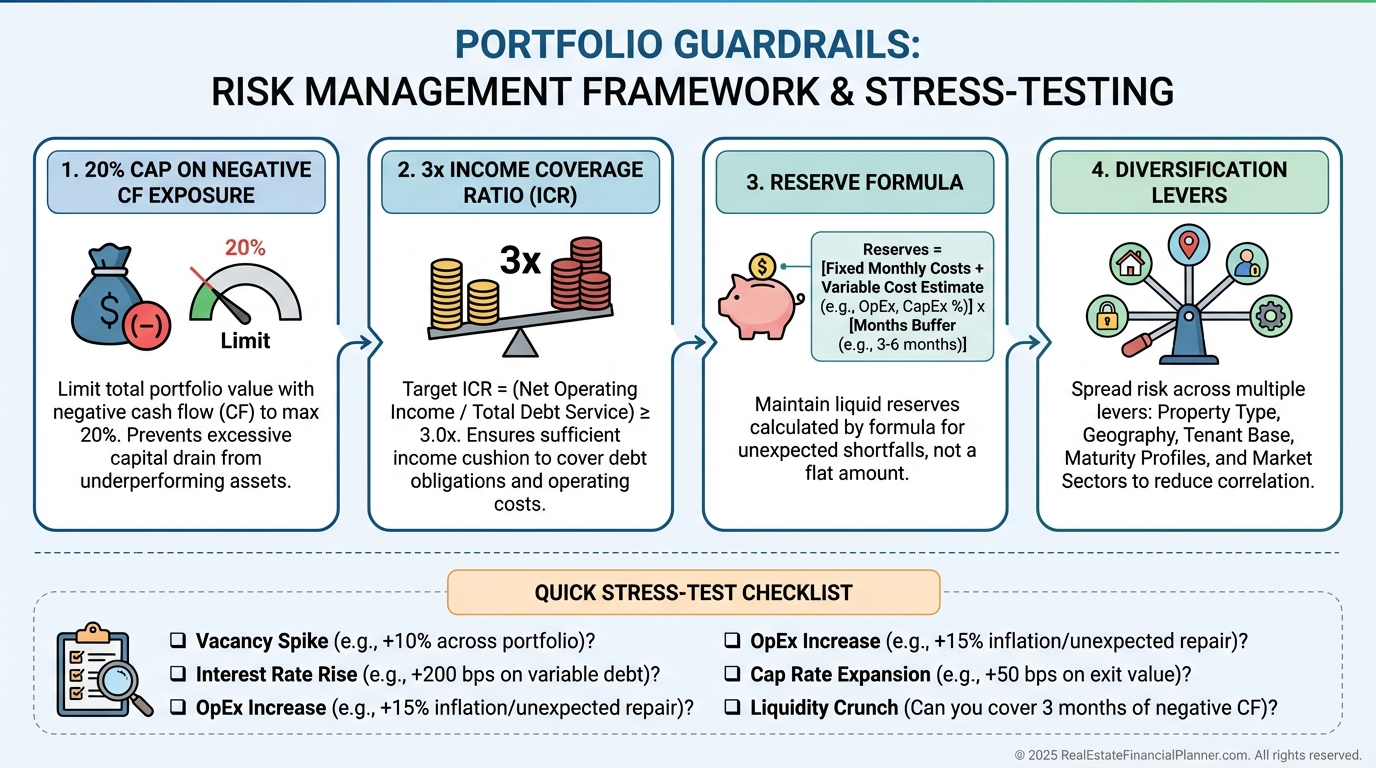
I cap exposure so a single shock doesn’t domino the portfolio.
My rules of thumb:
•
No more than 20% of portfolio value in negative cash flow assets
•
Income Coverage Ratio ≥ 3x total monthly deficits
•
Reserves = 18 months of deficits + 6 months of all property expenses
•
Stress test for 20% rent cuts and 10% higher vacancy
I diversify by geography, property type, and tenant profile to keep risks uncorrelated.
I also pre-plan exits and know my break-even sale price including costs and taxes.
Case Study: 20% Down vs 35% Down on the Same Property
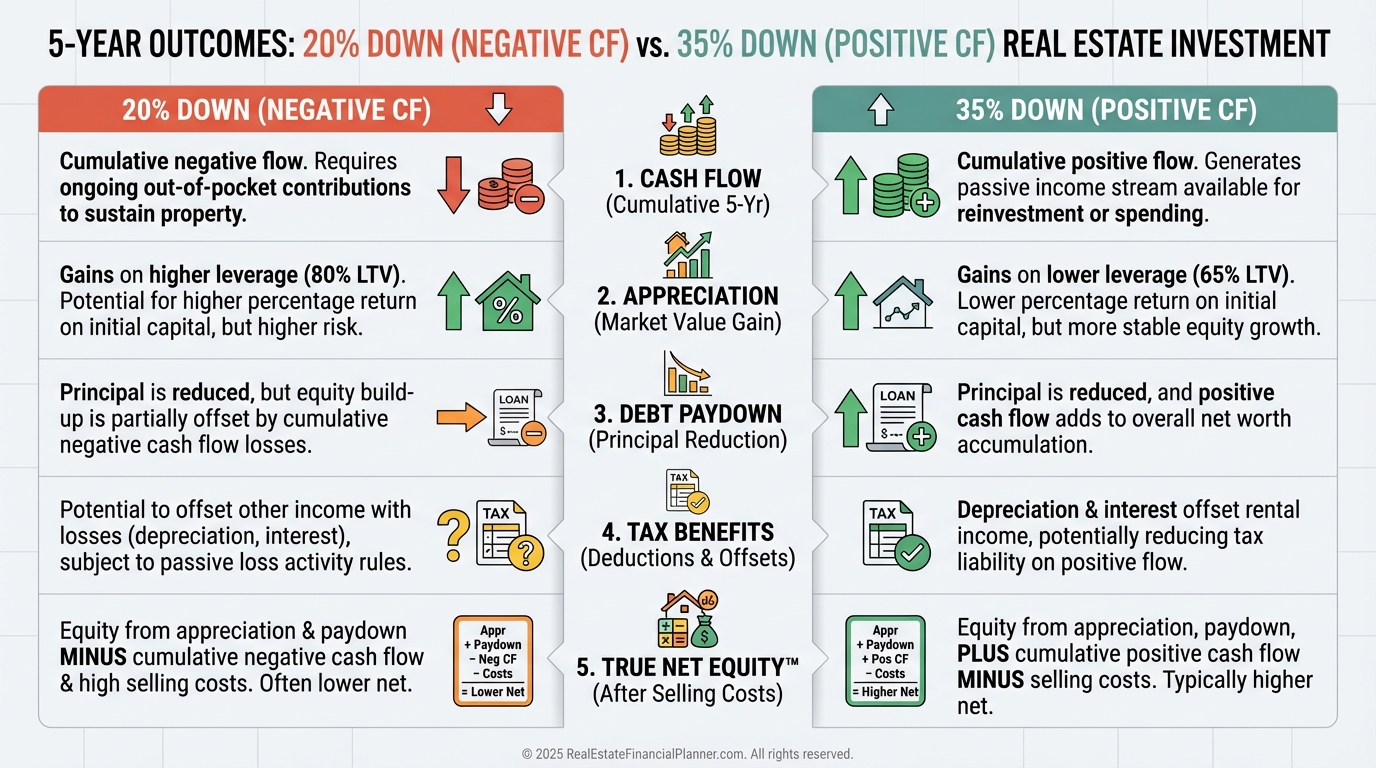
Let’s compare the same $400,000 rental at 6.75% with $2,500 rent.
Scenario A: 20% down has negative $300 per month. Scenario B: 35% down is slightly positive.
Over five years, assume 3% appreciation, standard amortization, and typical depreciation benefits.
Scenario A may produce higher Return on Equity due to leverage, even with the monthly check.
Scenario B produces calmer sleep and earlier free cash flow, with lower total ROI on similar appreciation.
When I run this for clients, we choose based on goals, risk tolerance, and the size of the “deferred down payment” they’re willing to pay.
How I Decide With Clients
We walk through a simple checklist before saying yes.
•
Does Return Quadrants™ clearly outweigh the drip of negative cash flow?
•
Can your non-rental income cover 3x the monthly deficit for 18 months?
•
Do you have multiple levers to improve income within 24 months?
•
Are you willing to Nomad™ for better terms and lower payment if needed?
•
Does the spreadsheet stress test still pass with conservative assumptions?
•
Is there a clear path to positive cash flow or a well-defined exit?
If we can’t write the check confidently for the duration, we don’t buy.
If we can, negative cash flow becomes a controlled tool, not a creeping risk.
The Bottom Line
Negative cash flow is neither hero nor villain. It’s a choice.
Treat it as a deferred down payment, model it rigorously, and keep reserves high.
Use The World’s Greatest Real Estate Deal Analysis Spreadsheet™ to define the plan, track the path, and avoid surprises.
Wealth in real estate is total return, not just monthly spread. Measure it the way professionals do, and act with intention.