Nomad™ with Lease-Option Exits: The Step-by-Step Playbook to Fund Every Next Home with the Last One
Learn about Nomad™ with Lease-Option Exits for real estate investing.
Why This Strategy Works
When I help clients accelerate safely, I look for strategies that self-fund without cutting corners.
Nomad™ with Lease-Option Exits does exactly that.
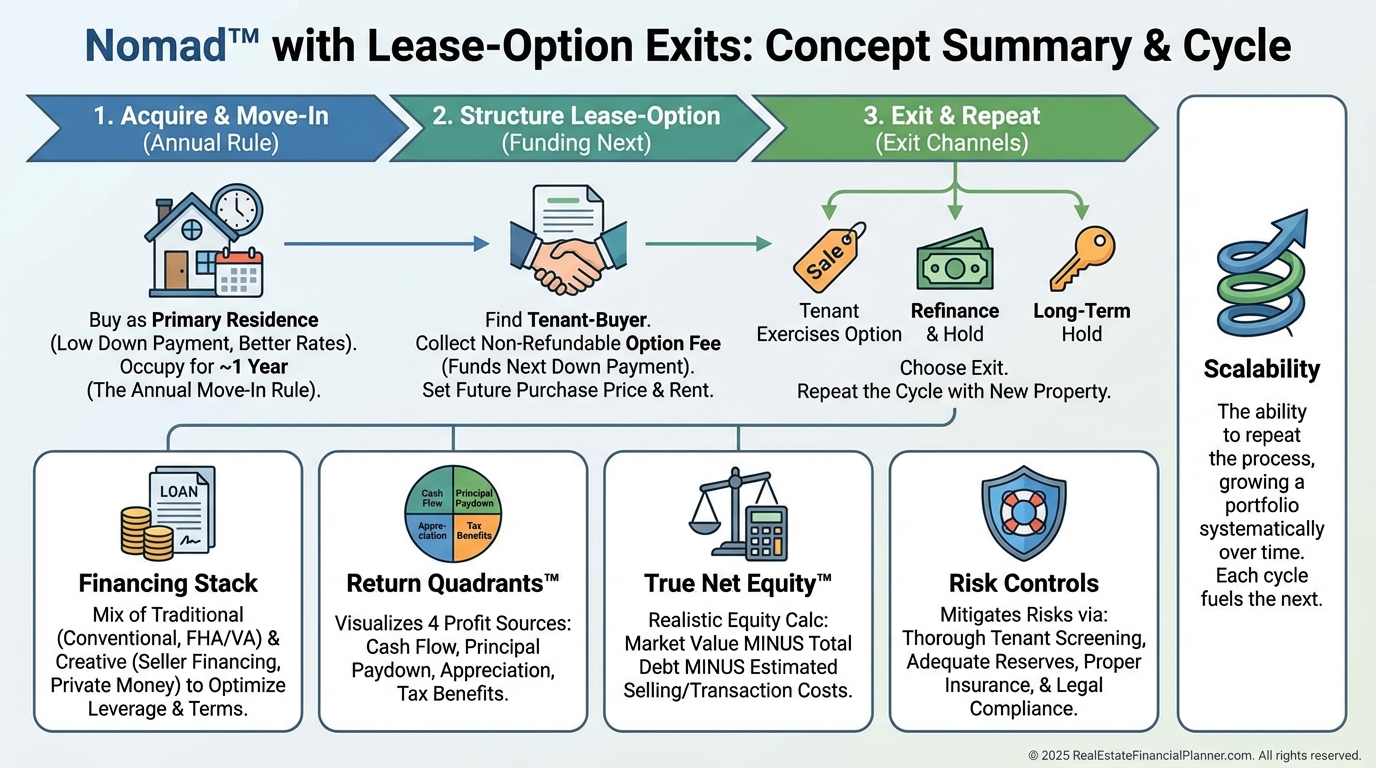
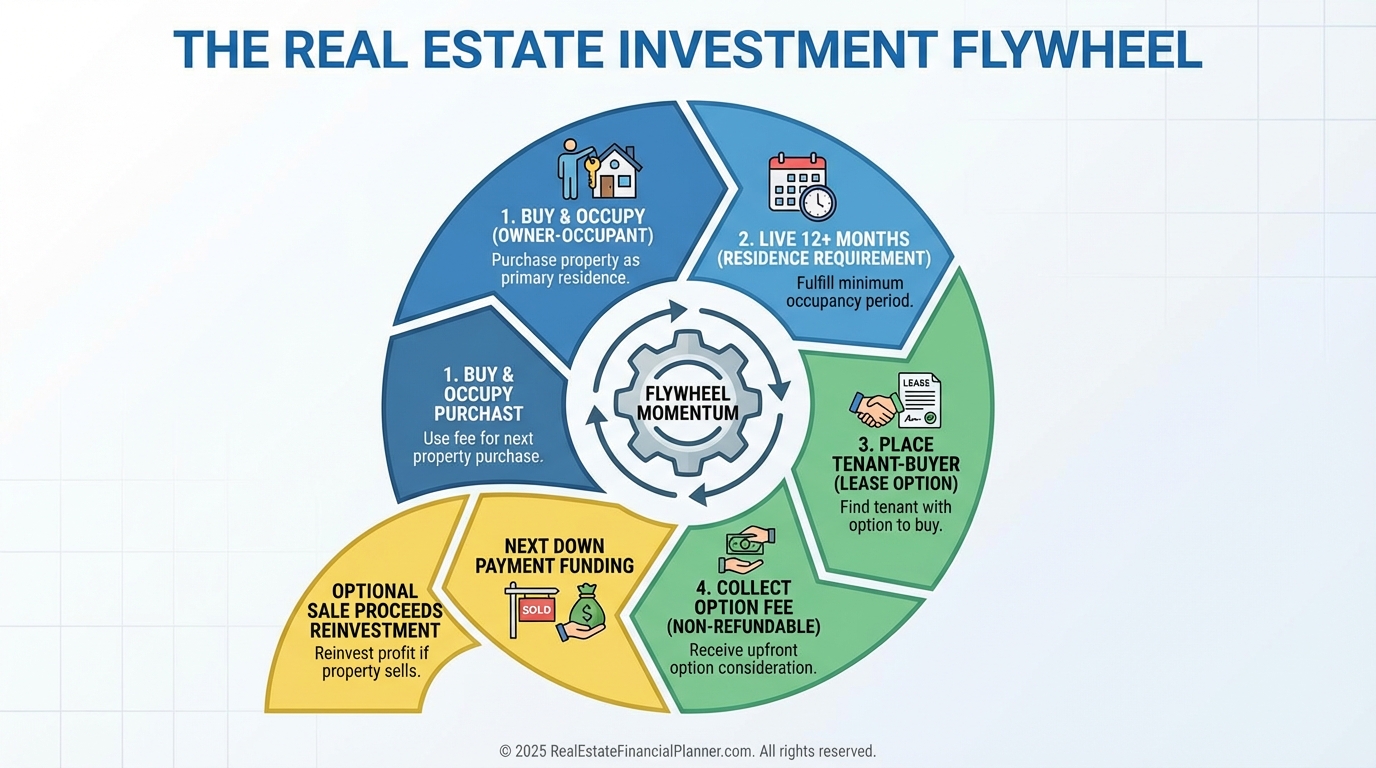
You buy as an owner-occupant, live there at least a year, then place a qualified tenant-buyer on a lease-option.
Their upfront, non-refundable option fee can become the down payment on your next home.
You keep owner-occupant interest rates, reduce capital expenses by selling earlier, and optimize Return on Equity by recycling profits.
What Is Nomad™ with Lease-Option Exits?
Traditional Nomad™ converts last year’s home into a long-term rental after you move.
Nomad™ with Lease-Option Exits converts last year’s home into a rent-to-own with a lease-option or lease-purchase.
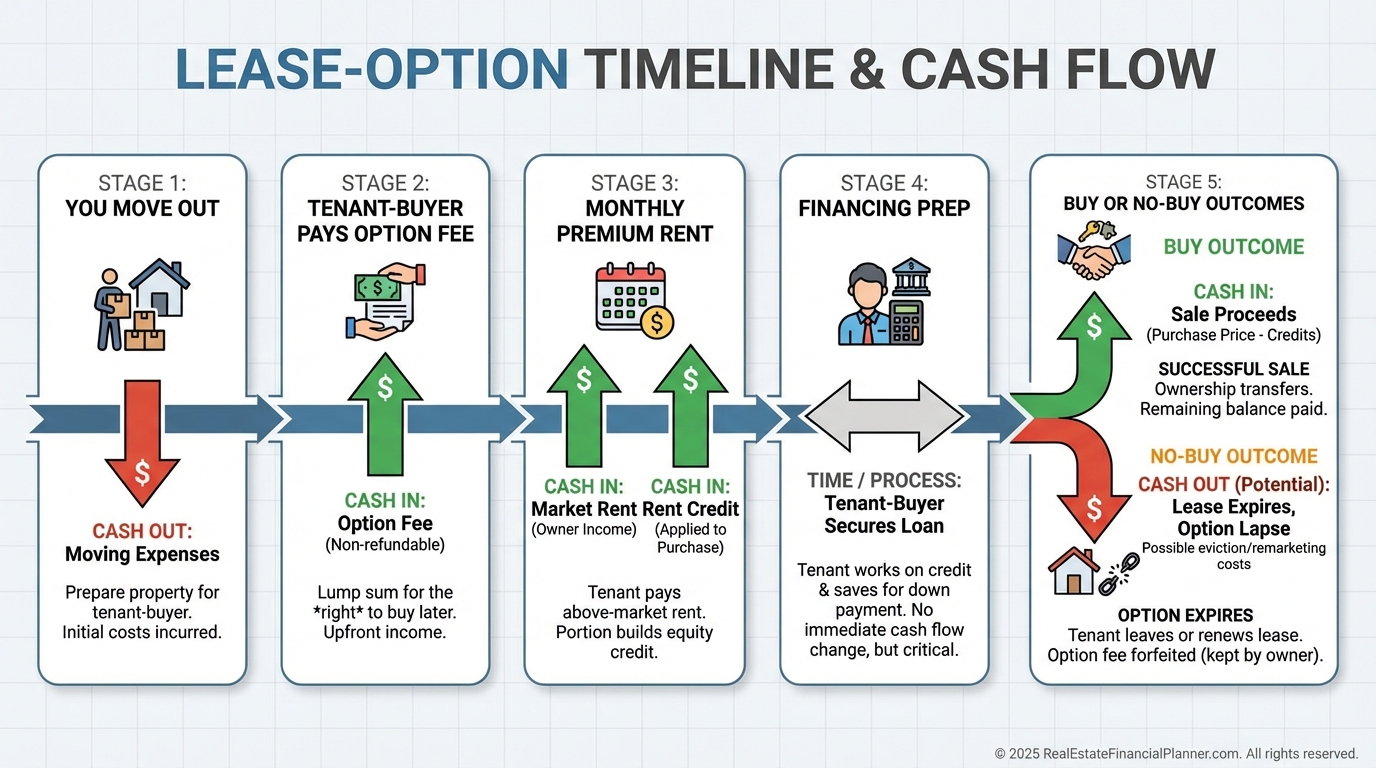
You collect a meaningful option fee before move-in, premium rent during the term, and a potential lump sum when they buy.
If they don’t buy, you can re-option, convert to a traditional rental, or sell conventionally.
Compliance First: Owner-Occupant Rules
You must actually move in and intend to live there for at least 12 months.
When I underwrite plans, I treat occupancy fraud as a non-starter.
Lenders verify occupancy; misrepresentation can mean fines or worse.
Stay 12 months or longer, then proceed.
Financing the Purchase You Live In
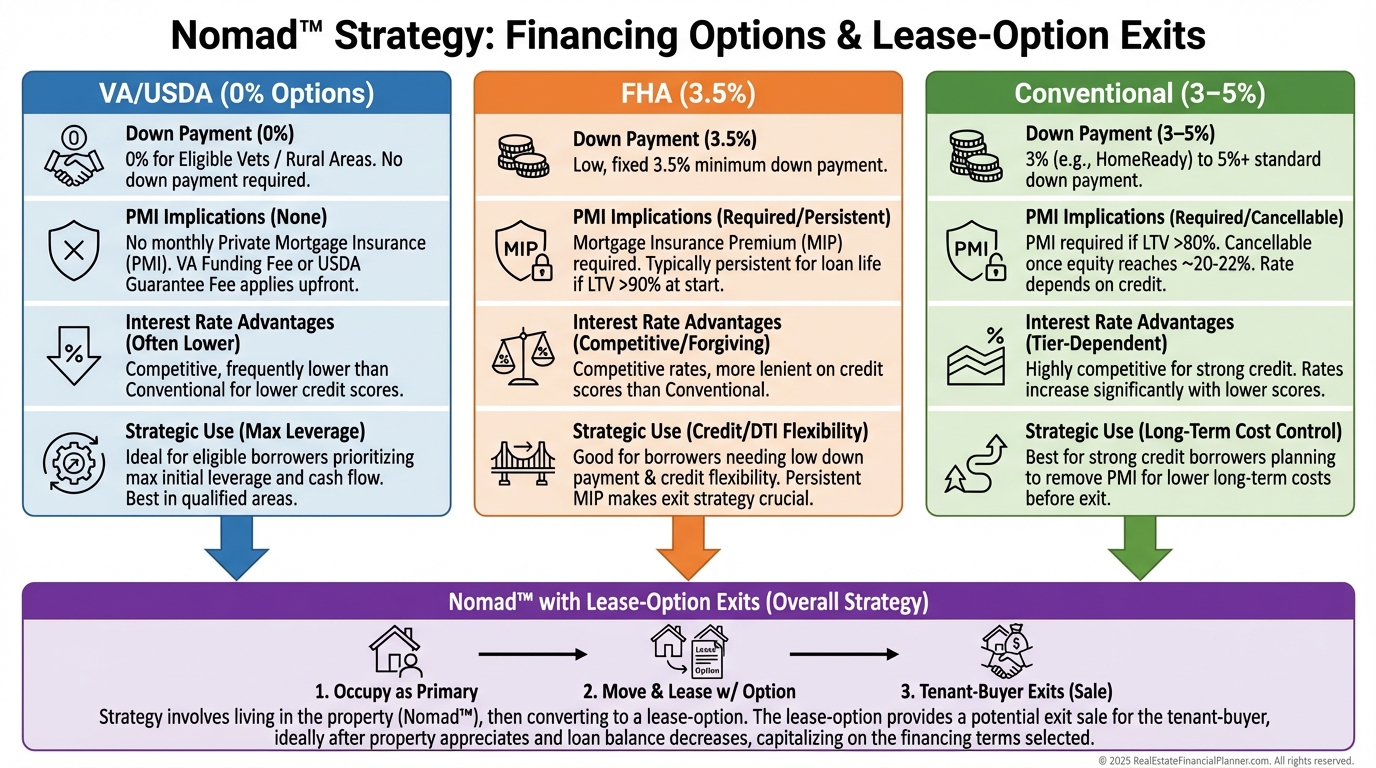
Owner-occupant loans are the engine.
Private Mortgage Insurance is common under 20% down, but lease-option premiums often offset PMI’s drag.
When I model this, I check payment-to-income ratios, projected rent premiums, and reserves for at least 6 months of expenses.
Structuring the Lease-Option
Here’s how I structure most deals.
•
Option fee: target 5%–7% of today’s price, non-refundable, credited toward their down payment when they buy.
•
Term: 12–36 months, long enough to mortgage-qualify and save.
•
Price: set today with reasonable appreciation baked in, or use a pre-agreed escalator.
•
Rent: premium vs market due to option value and reduced management.
•
Repairs: tenant-buyer handles minor items; you handle major systems per law and agreement.
•
Credits: I rarely offer rent credits; they complicate underwriting and appraisals.
•
Legal: have a local attorney draft state-specific documents; follow your state’s treatment of options, equitable interest, and default rules.
When I vet tenant-buyers, I underwrite the path to mortgage readiness before I accept their option fee.
I want today’s score, a plan to cure, and an RMLO or lender’s pre-screen for high odds of closing.
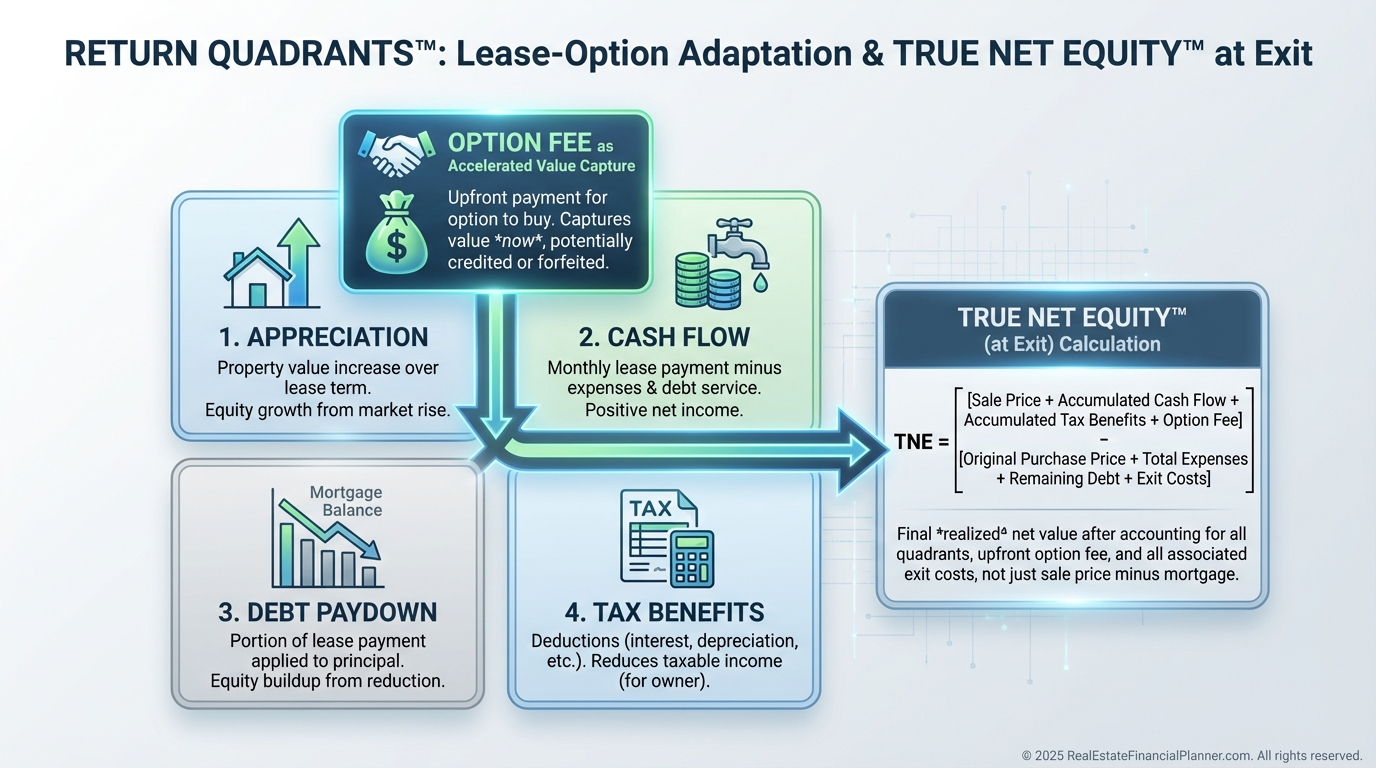
The Math: Return Quadrants™ + True Net Equity™
I teach clients to view returns through Return Quadrants™.
•
Appreciation: value growth while you own.
•
Cash Flow: usually improved with rent-to-own premiums.
•
Debt Paydown: principal reduction continues.
•
Tax Benefits: Cash Flow from Depreciation™ offsets taxable income while rented.
Add the option fee as accelerated value capture.
Use True Net Equity™ to see what you really own after cost to access: payoff, closing costs, concessions, and taxes.
When you sell to your tenant-buyer, commissions are often minimized or eliminated, improving True Net Equity™ vs an MLS sale.
Money Required (And Where It Comes From)
You’ll need a down payment, closing costs, rent-ready funds, marketing, legal, and reserves.
Early on, you can front the down payment, then reimburse with the option fee.
Or require the option fee before their move-in and use it for your next purchase.
I model cumulative negative cash flow as “deferred down payment.”
If you’d put more down, it would be lower; since you didn’t, set aside a safety buffer.
Aim for 6+ months of expenses in reserves.
Duration, Workload, and Capital Expenses
Most clients hold each home 2–5 years with this variation.
Workload is higher than traditional Nomad™ due to marketing, screening, and occasional sales.
Reward: you often sell before roofs, furnaces, or big turns hit, avoiding capital expense shocks.
That’s a silent boost to your Return on Equity and cash flow.
Exit Channels and Buyer Financing
Primary exit is your tenant-buyer exercising the option.
Expect VA/USDA 0% down, Conventional 3%–5% down, or FHA 3.5% down.
Sometimes they pay cash.
If they don’t buy, your options are simple: re-option, rent traditionally, or sell on the open market.
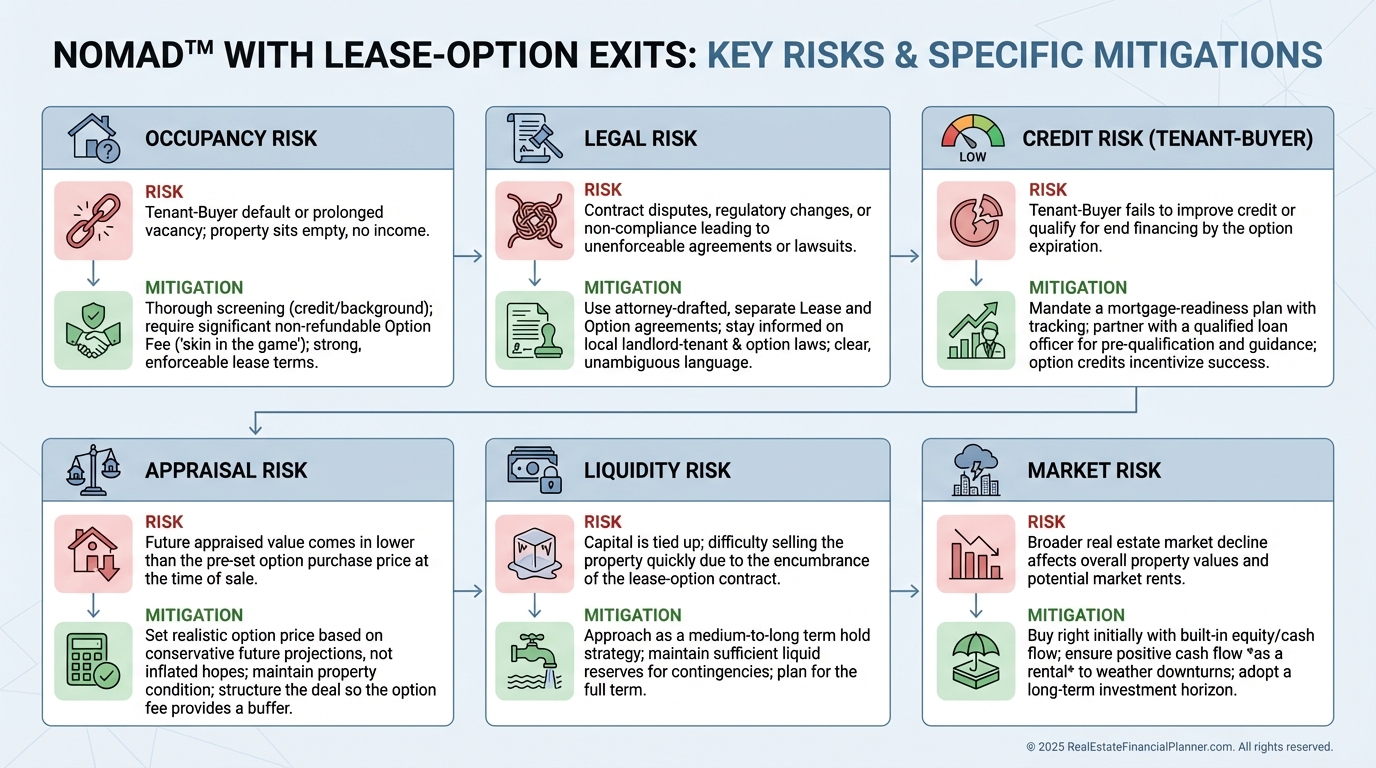
Risk Controls I Require
I treat this as a medium-risk strategy with asymmetric upside when done right.
Here’s what I check and avoid.
•
Occupancy integrity: live in 12+ months.
•
Legal clarity: no gray-area paperwork; use a local attorney.
•
Credit pathing: confirm their route to mortgage approval upfront.
•
Appraisal risk: price reasonably; avoid gimmicky credits.
•
Liquidity: maintain reserves and a line for surprises.
•
Market sensitivity: don’t count on aggressive appreciation; model flat cases.
•
Documentation: paper the option fee for lender use; keep clean, auditable files.
Scalability and the “Unlimited Down Payments” Effect
The option fee from last year’s home funds this year’s down payment.
Sale proceeds later supercharge the model.
Owner-occupant rates improve debt-to-income and cash flow, which helps qualify for the next loan.
This is how clients add properties faster than traditional 20% down investing.
Finding Deals That Tenant-Buyers Want
I prioritize homes mainstream buyers want to own.
•
MLS: target clean, low-CapEx homes in strong school and commute zones.
•
FSBO: flexible sellers and fewer eyes.
•
Wholesalers: occasionally a gem, but verify condition and financeability.
When I walk a property, I ask, “Would my best tenant-buyer be proud to purchase this in 24 months?”
Analyzing Deals (Use Our Free Spreadsheet)
Download it free at: https://RealEstateFinancialPlanner.com/spreadsheet
Input purchase, rent, taxes, insurance, and maintenance.
Then use Overrides to model option fee timing, premium rent, probable sale year, and exit costs.
Project Return Quadrants™ and True Net Equity™ year-by-year to validate the plan.
Market Conditions: Where This Shines
This excels in markets with steady appreciation, decent rent-to-price ratios, and strong owner-occupant demand.
It’s harder in flat/declining markets or where lease-options are constrained by local law.
Always verify your state’s rules and use compliant documents.
Skills That Matter
You’ll develop these quickly.
•
Acquisition financing with owner-occupant rules.
•
Lease-option structuring and legal coordination.
•
Marketing and screening for tenant-buyers.
•
Deal analysis using Return Quadrants™ and True Net Equity™.
•
Exit coordination and reinvestment discipline.
If you lack one today, borrow the skill from your team while you learn.
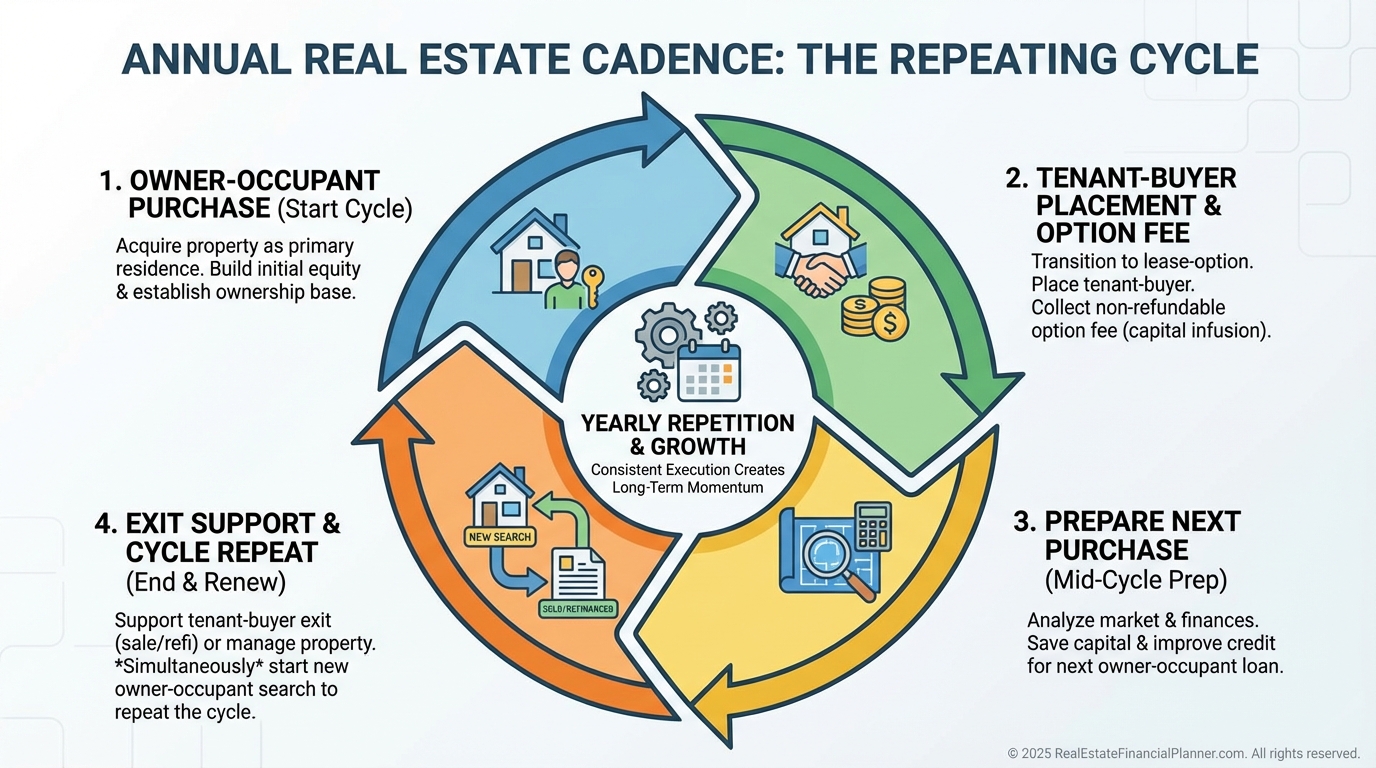
Your 12-Month Cadence
Here’s the rhythm I coach.
•
Months 0–2: buy owner-occupant, move in.
•
Months 3–11: improve, learn the area, prep next purchase criteria.
•
Month 12+: shop next home and market current for lease-option.
•
Before closing new home: accept option fee, document properly.
•
Months 13–24: support tenant-buyer’s mortgage-readiness, keep files pristine.
•
Years 2–5: they buy; you redeploy profit; repeat.
Common Mistakes I See (And How We Avoid Them)
•
Counting on appreciation to bail out bad buys.
•
Accepting underqualified tenant-buyers with small option fees.
•
Offering rent credits that kill underwriting later.
•
Ignoring reserves and then selling under pressure.
•
DIY legal docs from another state found online.
•
Failing to document the option fee for lender use at exit.
We model conservative cases, screen hard, and keep legal airtight.
A Quick Example
A client bought at 3% down, lived there 12 months, then placed a 6% option-fee tenant-buyer.
Premium rent improved cash flow; the option fee funded the next 5% down.
Two years later the tenant-buyer closed, minimizing sales costs and boosting True Net Equity™.
They repeated the process and accelerated to financial independence ahead of schedule.
Final Word
This is an entrepreneurial variation of Nomad™.
It asks more of you.
But it also pays you sooner and more often—option fees now, better cash flow during, and optimized True Net Equity™ at exit.
If you want a strategy that funds its own growth without betting the farm, Nomad™ with Lease-Option Exits belongs in your plan.