Surveyor Essentials: Protect Your Real Estate Deals
Learn about Surveyor for real estate investing.
Why a Surveyor Belongs on Your Deal Team
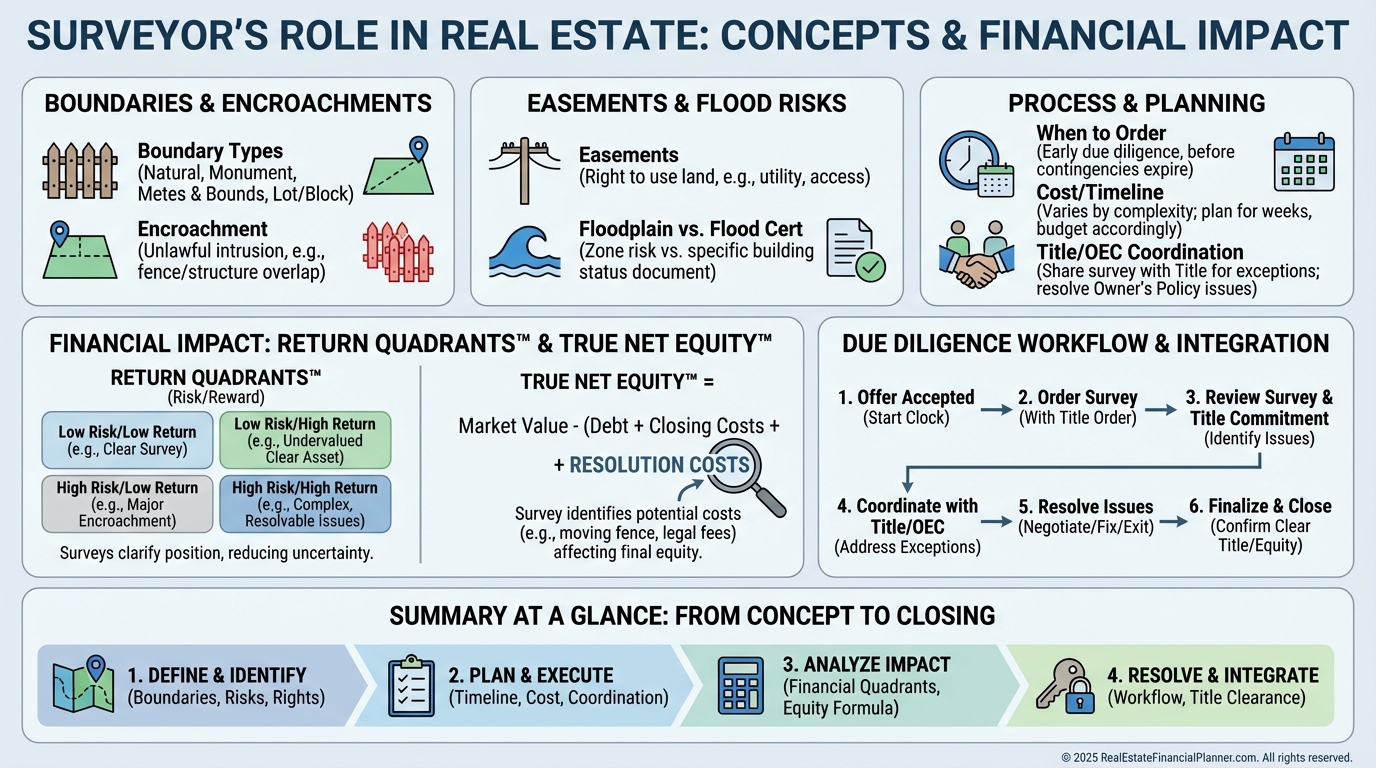
When I help clients assemble a lean, effective due diligence stack, the surveyor is the quiet professional who prevents loud, expensive problems.
A certified survey defines what you actually own, what your neighbor owns, and where the law draws the line in between.
What a Surveyor Actually Delivers
Surveyors measure, mark, and map property boundaries and improvements, then certify their findings.
You get a drawing and a legal description you can rely on for planning, permitting, title insurance endorsements, and future resale.
They identify encroachments, record easements and rights of way, and reveal conflicts between paper plats and ground truth.
If there is a dispute, the surveyor’s sealed survey becomes the objective evidence to resolve it.
When to Order a Survey
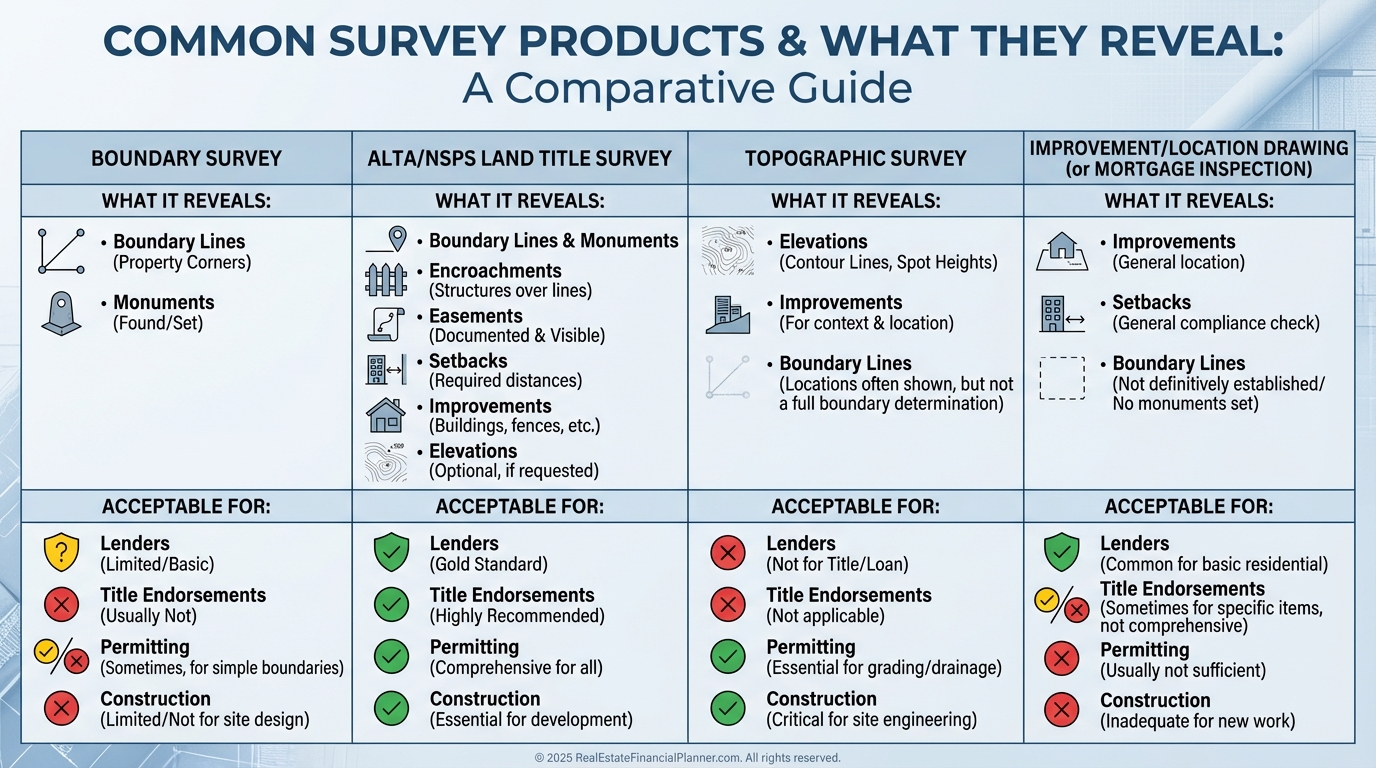
In platted subdivisions with well-established lots, many investors skip a survey if no improvements sit near the line.
There is risk in skipping, but some accept it when returns justify it and risk is low.
Outside platted neighborhoods, on rural or irregular parcels, or with large acreage, I strongly recommend a new certified boundary survey.
If a seller has an existing survey, review it but verify age, certification, and whether site conditions changed.
Risk, Returns, and RealEstateFinancialPlanner.com Frameworks
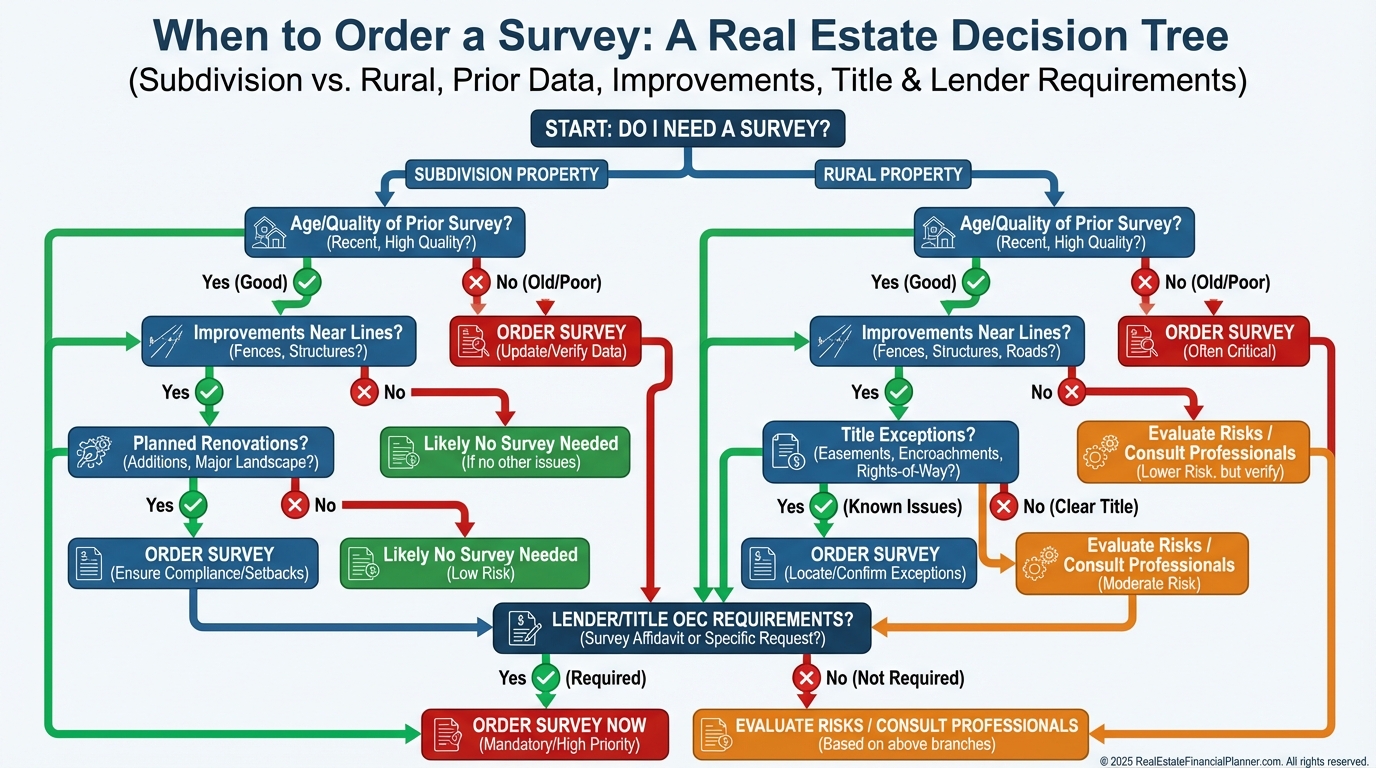
I quantify survey risk using Return Quadrants™ and True Net Equity™ so we can compare apples to apples across deals.
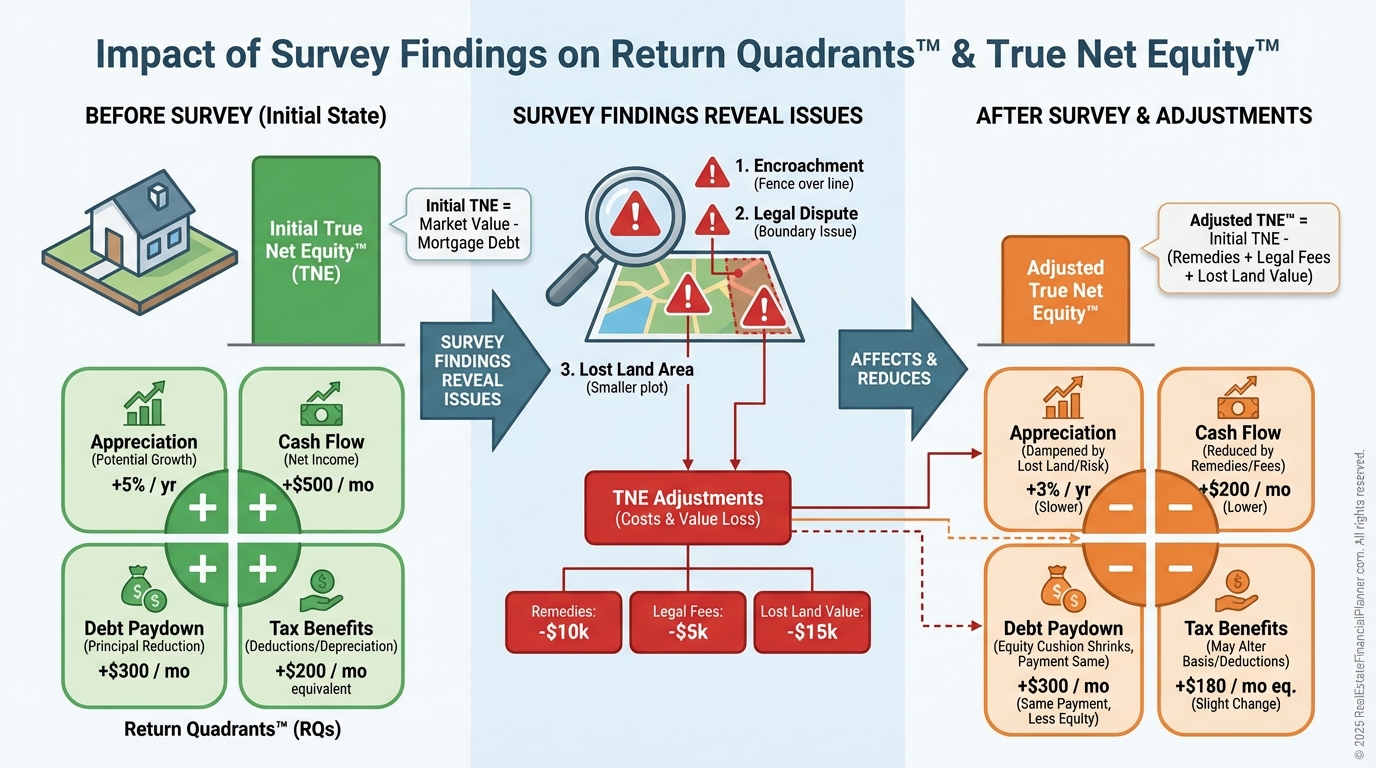
If there’s a 10% chance an encroachment will cost you $8,000, I model an expected $800 reduction to first-year True Net Equity™ and stress-test cash reserves.
That expected cost also reduces your total return in the Return Quadrants™ framework by lowering appreciation certainty and increasing CapEx drag.
For Nomad™ buyers planning to add a fence or shed after move-in, I model survey cost as a pre-renovation due diligence line item and avoid setback violations that derail future refinance or resale.
What I Check, Model, and Warn Clients About
I cross-check survey bearings against the legal description to confirm the legal matches the land.
I scan for encroachments from or onto the subject: fences, driveways, sheds, retaining walls, eaves, and utility lines.
I examine platted easements and any unrecorded use visible on the ground that could become an adverse claim.
I review setbacks and zoning to confirm every improvement sits where the code requires.
I flag any gap between the title commitment’s legal description and the surveyor’s findings and coordinate with title to clear exceptions.
Subdivisions vs Rural and Acreage
In subdivisions, lot corners often have monuments and previous surveys you can reference.
In rural or irregular tracts, historical deeds may conflict, monuments may be missing, and boundaries can run through trees, creeks, or rock outcrops.
That ambiguity is where surveyors earn their keep.
Easements, Rights of Way, and How They Limit Use
Easements grant others the right to use parts of your land for access, utilities, or drainage.
I treat easements as use restrictions in underwriting and adjust land utilization assumptions for future additions, parking, or ADU placement.
A survey reveals where they sit so you can plan around them and avoid wasted design work.
Title Insurance, OEC, and Survey Coordination
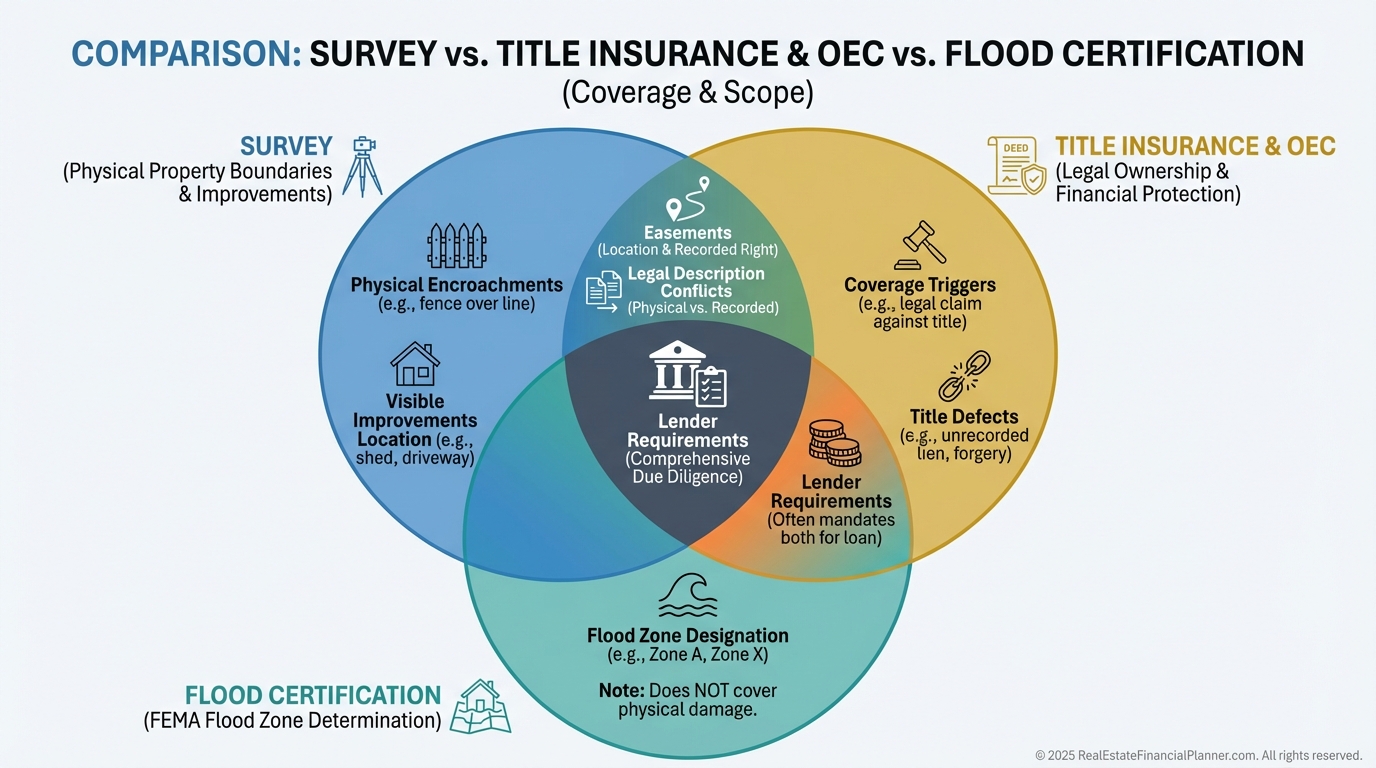
Some title companies require a current survey to issue Owner’s Extended Coverage (OEC) that protects against certain boundary and encroachment issues.
Others may sell OEC without a new survey, but that choice can limit coverage and leave you exposed.
Use the title company’s OEC requirement as a signal about boundary risk, not just a closing hurdle.
Floodplains, Lender Requirements, and Why It Matters
Separately, lenders often order a flood certification to determine if flood insurance is required; that is not a survey but a different tool with different data.
Costs, Timelines, and Scoping It Right
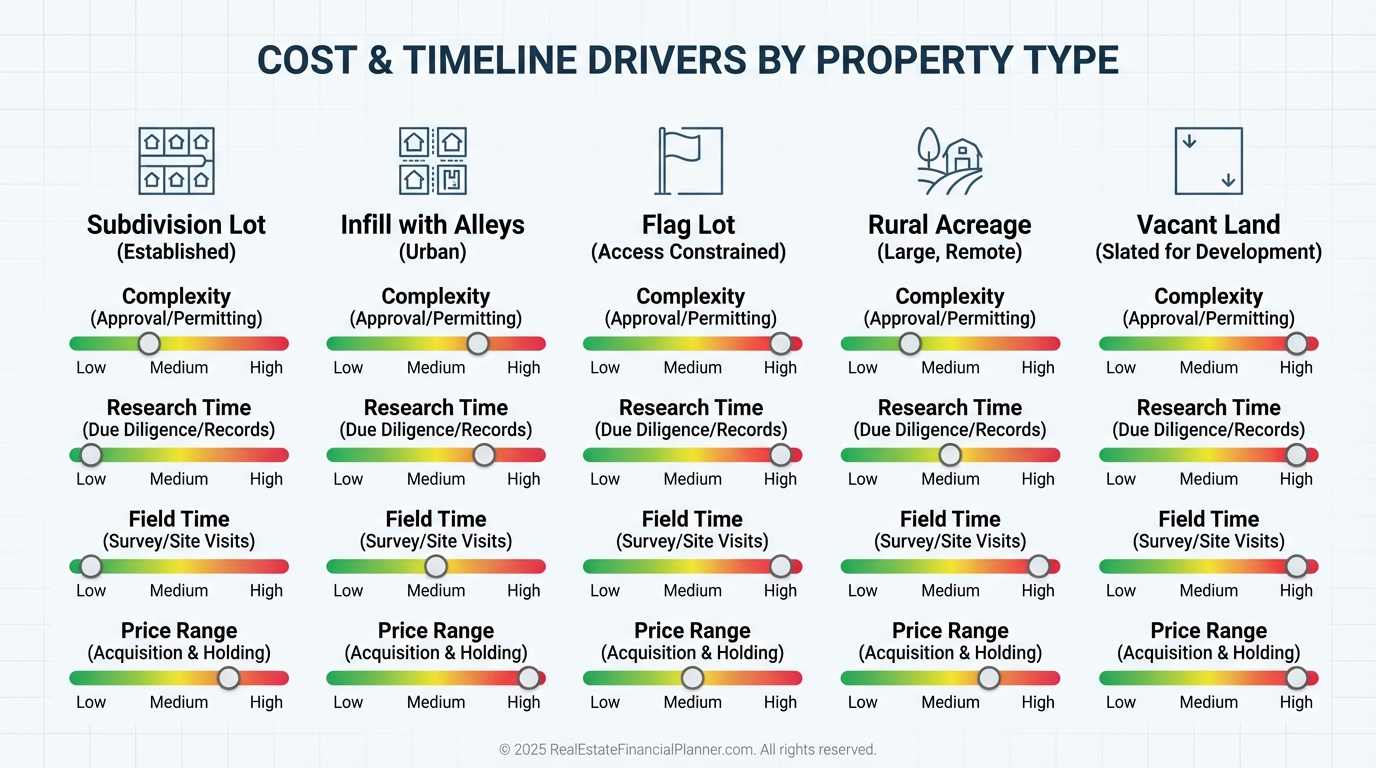
Survey pricing is a function of parcel size, complexity, terrain, tree cover, monument availability, records research, and your deadline.
Expect lead times to lengthen in peak season and for re-staking or additional set monuments to cost extra.
Clarify deliverables in writing: sealed drawing, digital CAD, corner monuments set, improvements located, and easements shown.
Renovations, Setbacks, and Permitting
Before you add a fence, deck, garage, or ADU, confirm setbacks and height limits against a current survey.
I’ve seen clients tear down brand-new fences that crept six inches onto a neighbor’s lot.
For flips, I require a survey before any addition so the design team doesn’t draw plans that planning will reject.
Vacant Land and Subdivision Potential
On vacant land, a survey is foundational for feasibility, utilities routing, and preliminary platting.
If you anticipate subdividing later, get a survey early to confirm density, frontage, and access meet code.
That clarity reduces entitlement risk and shortens your development timeline.
Agents and Boundary Lines
Do not rely on your real estate agent to locate property lines.
A GPS phone app and a good guess are not a legal survey and not a defense in a dispute.
Hire a licensed surveyor for boundary opinions you can bank on.
Certification Quality and How to Read It
Make sure the survey is certified, signed, and sealed by a licensed surveyor in the property’s jurisdiction.
Check the date, basis of bearings, monuments found or set, and any notes about measurement precision or unresolved conflicts.
Those notes tell you exactly how much certainty you are buying.
Due Diligence Workflow I Use
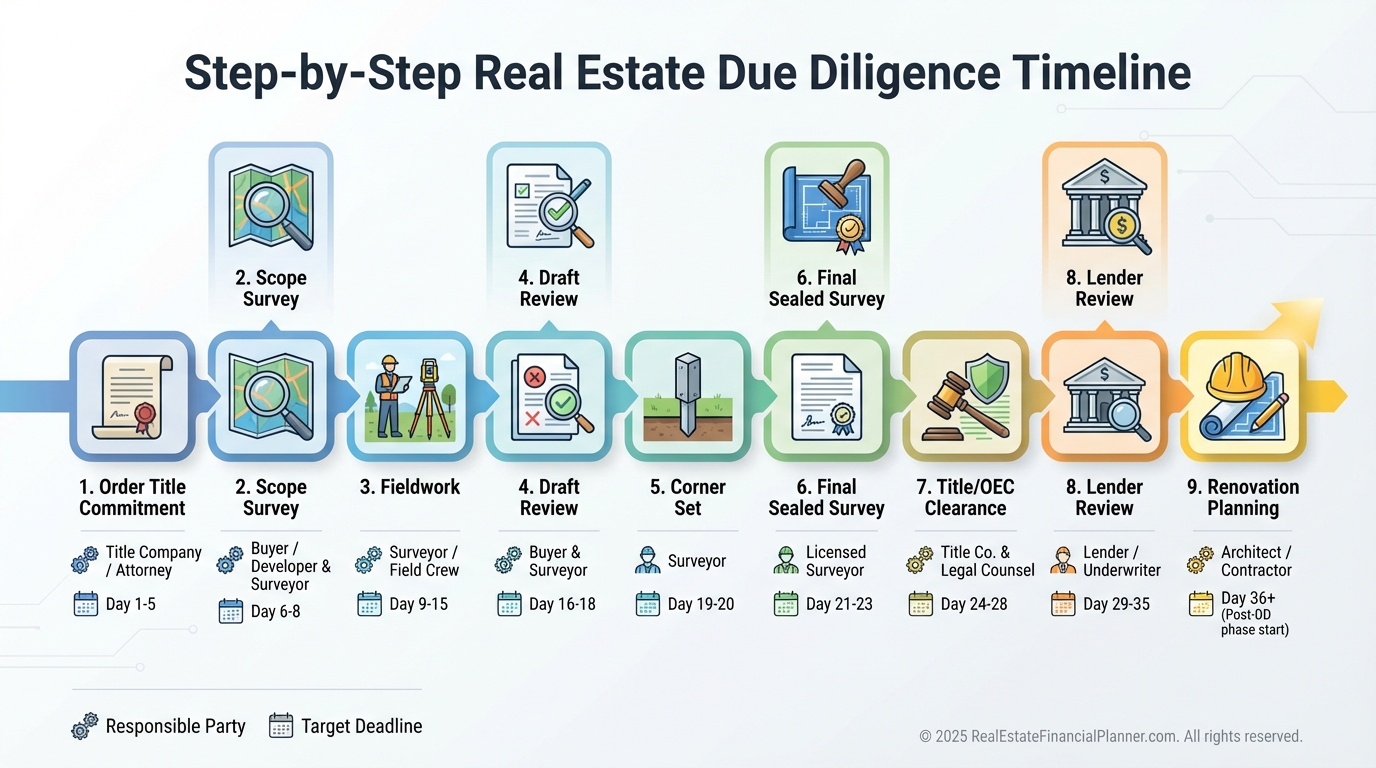
I order the title commitment first, so the surveyor can show recorded easements and exceptions on the drawing.
I scope the survey based on intended use: finance-only, addition planned, or development.
I calendar survey delivery to land before inspection objections and OEC deadlines.
I review with title, lender, and contractor so every stakeholder aligns on what the land allows.
How Surveys Protect Your Investment
They prevent boundary disputes, preserve resale value, and avoid forced tear-outs.
They help you use all of what you bought, and none of what you didn’t.
They keep your project in compliance and your returns intact.
Quick Action Checklist
Confirm if the property is platted or rural.
Review any prior survey for age, certification, and site changes.
Order a certified boundary survey when risk, renovations, or OEC demand it.
Verify setbacks, easements, and encroachments before building.
Coordinate survey findings with title, lender, and your contractor.
Model survey cost and potential remedies in True Net Equity™ and Return Quadrants™.
Protect cash flow with proper flood certification and, if needed, flood insurance pricing.