Painter Playbook for Investors: How Pro Paint Turns Boost Rent, Protect Assets, and Slash Vacancy
Learn about Painter for real estate investing.
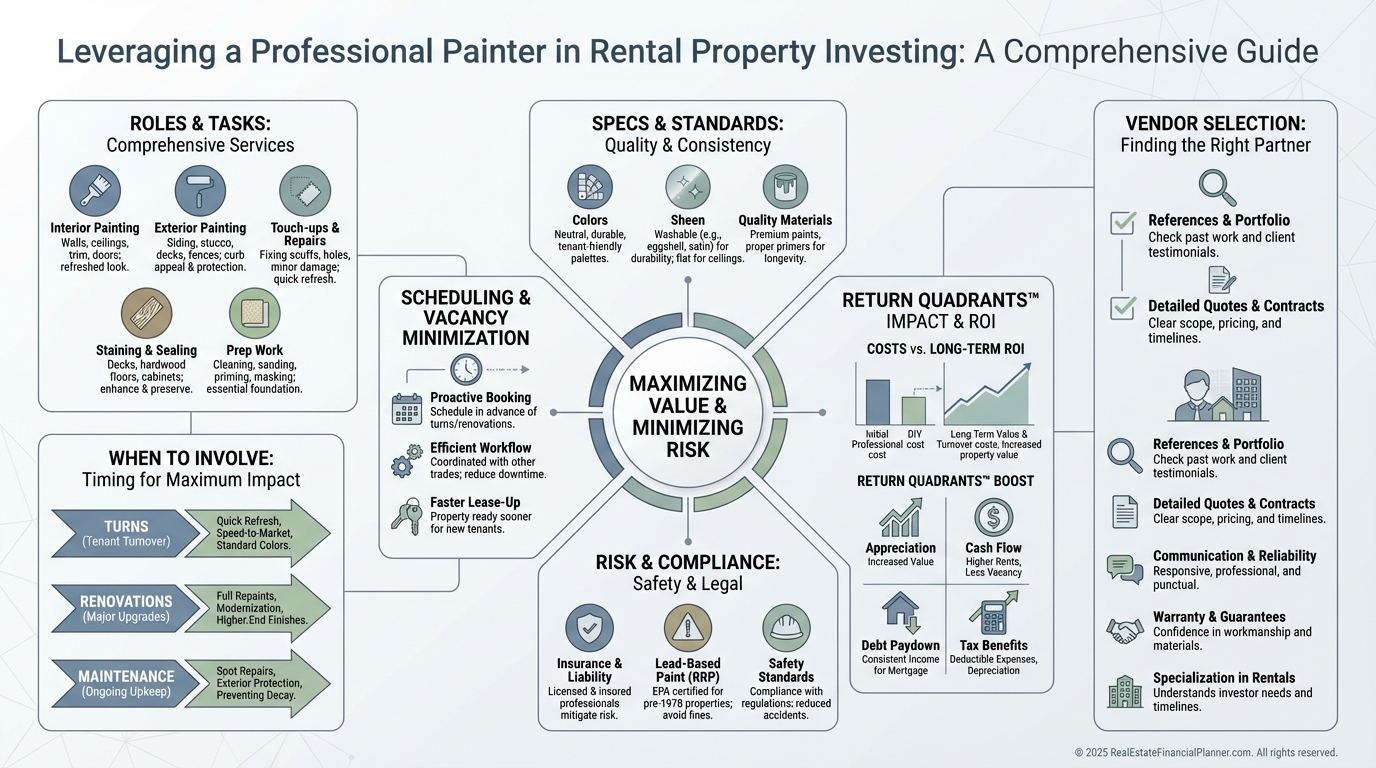
Why a Painter Belongs on Your Investing Team
When I help clients plan turns, the painter is the first call after we walk the unit.
Fresh paint resets perception, reduces make-ready days, and protects your building envelope.
Professional coatings are not just cosmetic.
On the Real Estate Financial Planner, I model paint decisions for vacancy days saved, rent delta achieved, and deferred exterior replacement.
Those inputs move True Net Equity™ and the Return Quadrants™ in meaningful ways.
What Professional Painters Actually Do
Interior repainting is the make-ready workhorse: walls, ceilings, trim, doors, and spot-priming patches for a uniform finish.
Exteriors need periodic coating of siding, trim, fascia, and railings to protect against UV, moisture, and freeze-thaw.
Good painters also handle touch-ups between tenants, so you avoid full repaints when 80% still looks new.
Most will stain decks and fences, seal porches, and caulk penetrations to keep water out.
Surface prep is where pros earn their fee: cleaning, deglossing, scraping, sanding, patching, priming, and masking.
When to Involve Your Painter
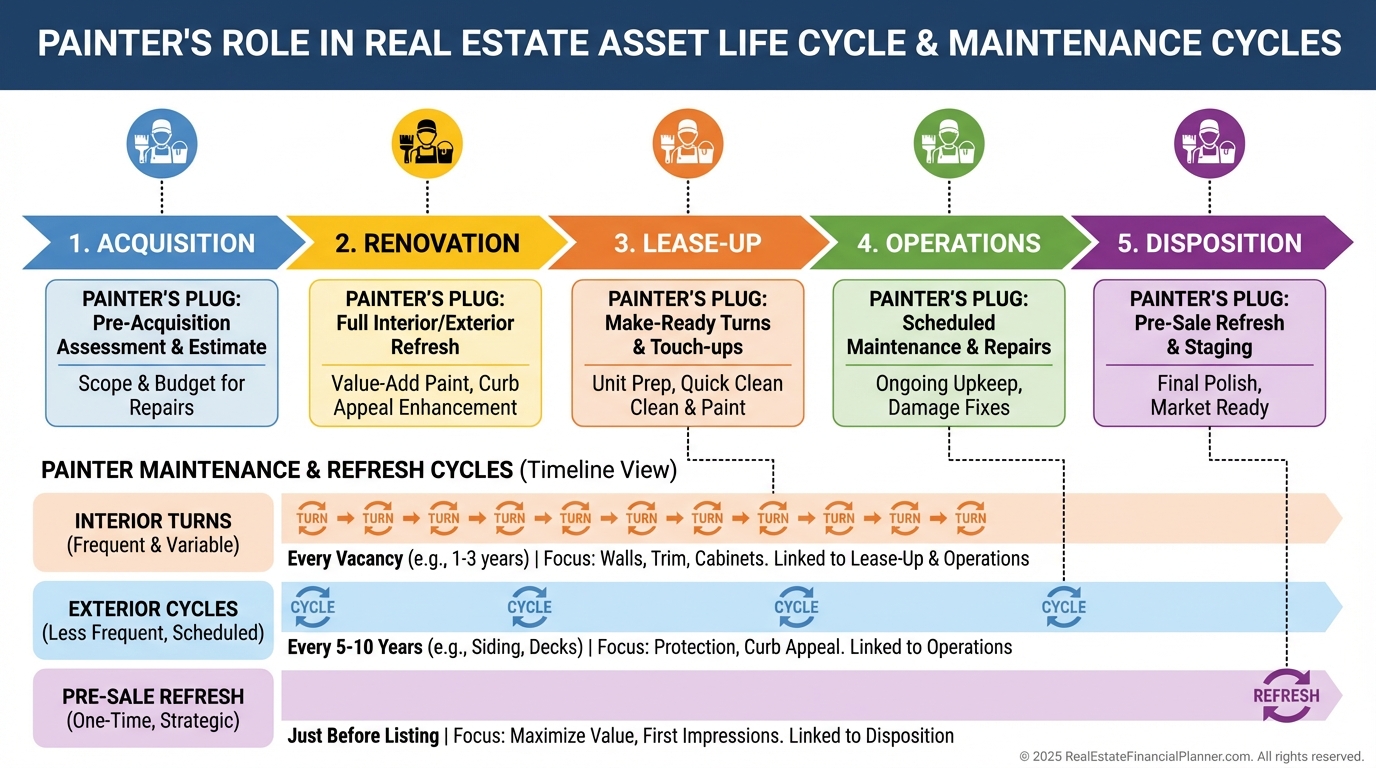
I bring painters in at three moments: pre-list turn, mid-renovation, and on a fixed exterior cycle.
Before showings, I authorize a “paint-first” scope to shorten vacancy regardless of other trade delays.
During renovations, the painter is scheduled after rough trades and before final clean to avoid rework.
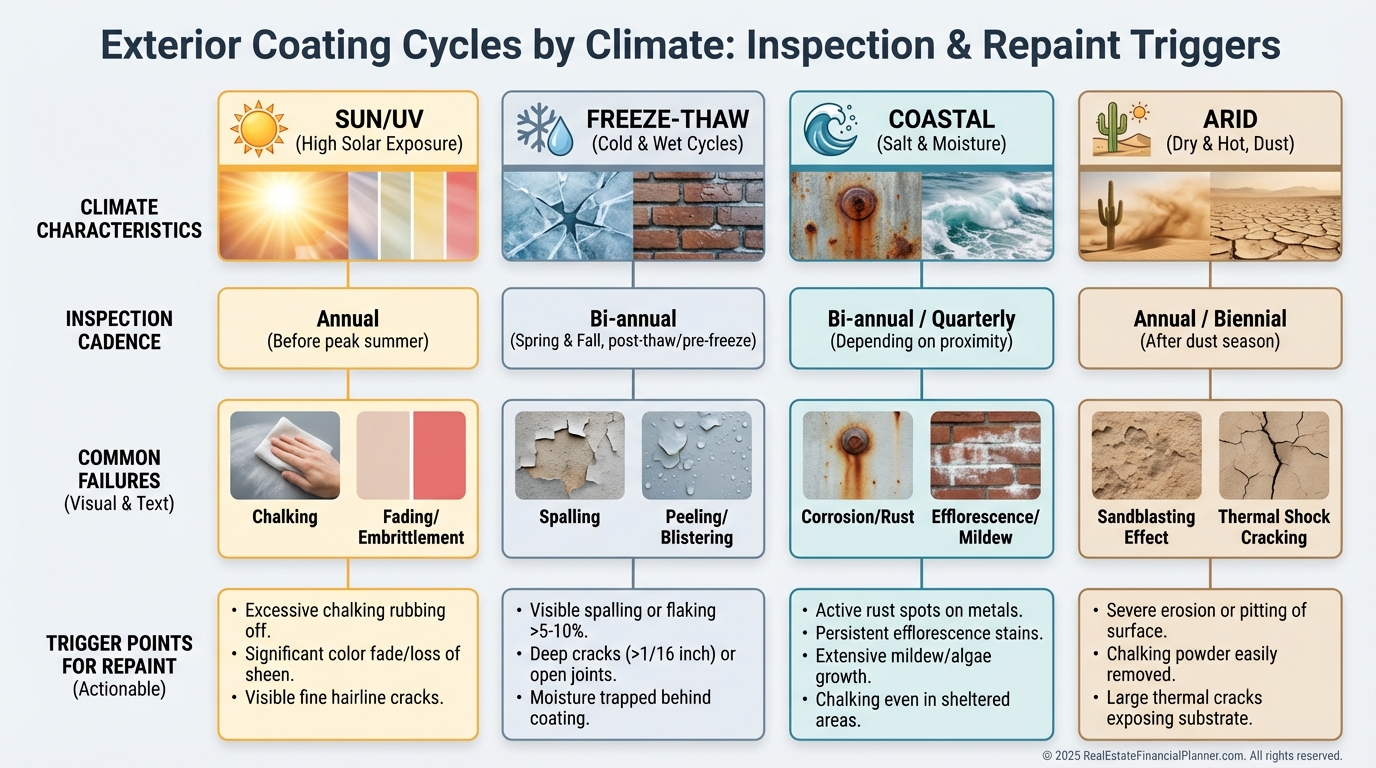
For exteriors, I budget by climate: usually every 5–8 years, but as tight as 3–4 on sun-beaten elevations.
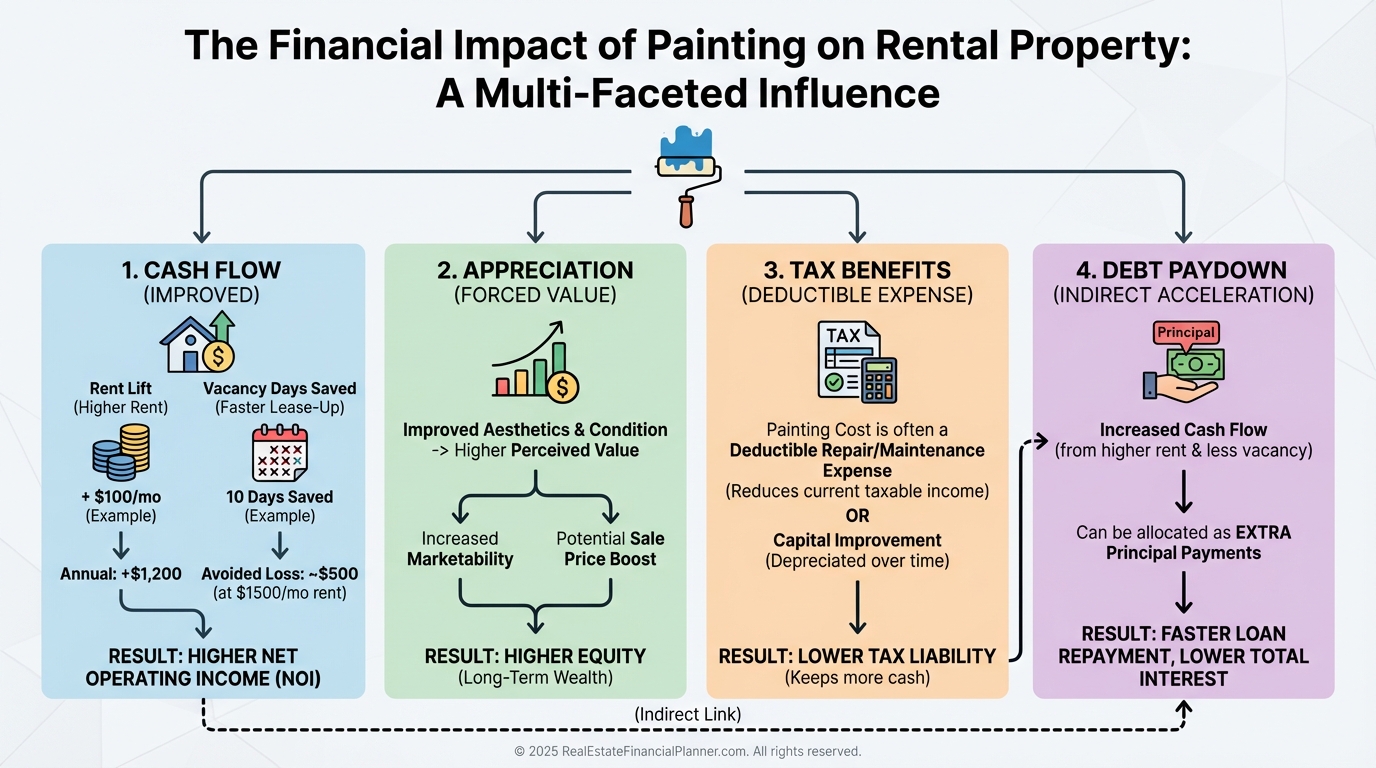
How Paint Choices Impact Returns (Return Quadrants™)
Cash Flow: paint can raise effective rent $25–$75 per month and cut 3–7 vacancy days with faster showings.
Appreciation: curb appeal nudges valuation and buyer competition at disposition.
Debt Paydown: unaffected directly, but stabilized occupancy helps you keep amortizing on schedule.
Tax Benefits: many interior paints qualify as repairs/maintenance, expensed in the current year, while some exterior or scope-broadening projects may be capitalized.
When I model a $1,800 turn paint that cuts vacancy by 5 days at $65/day and raises rent $40/month, the payback is under 9 months.
That is a high-confidence micro-ROI I’ll take all day.
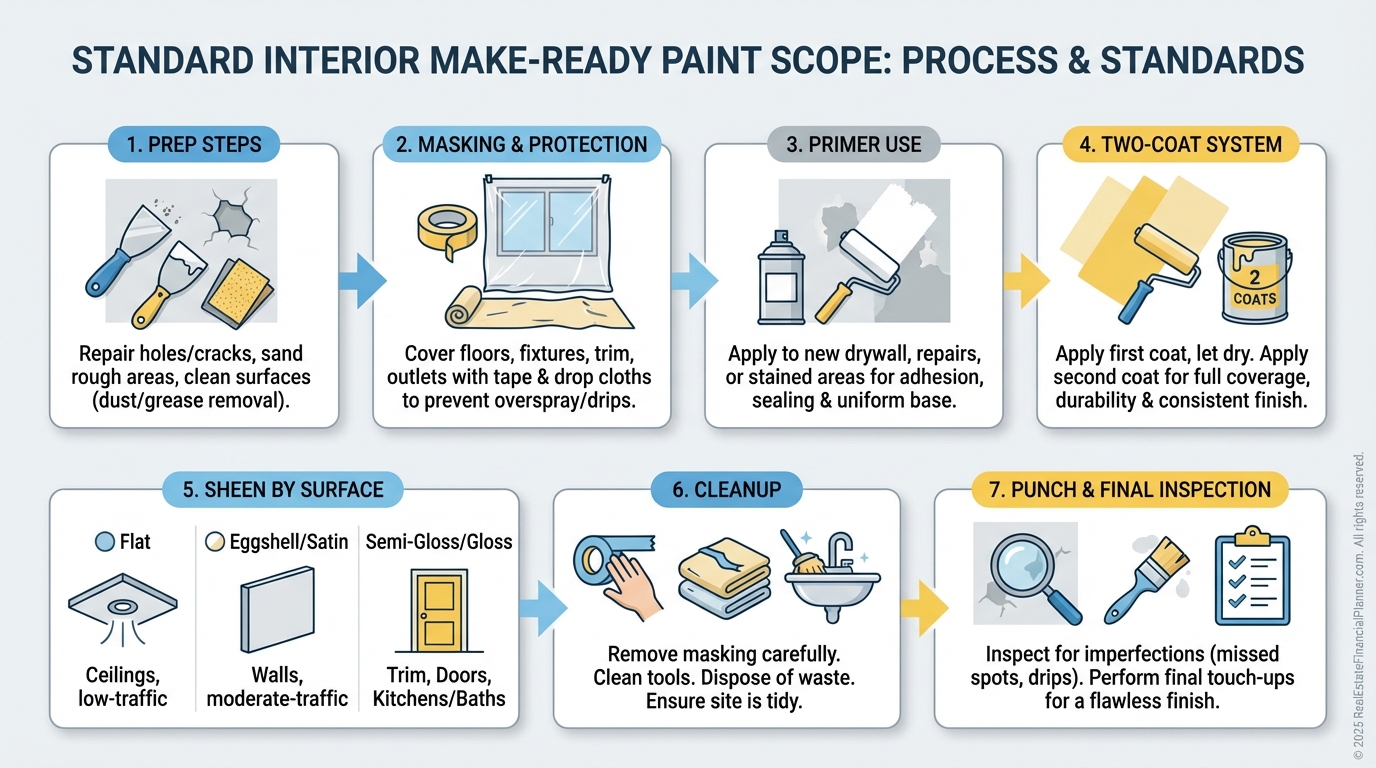
Standards, Specs, and Scopes I Give My Painters
Standardization wins turns.
I issue a standing scope, SKUs, and photos so any crew can execute without me on site.
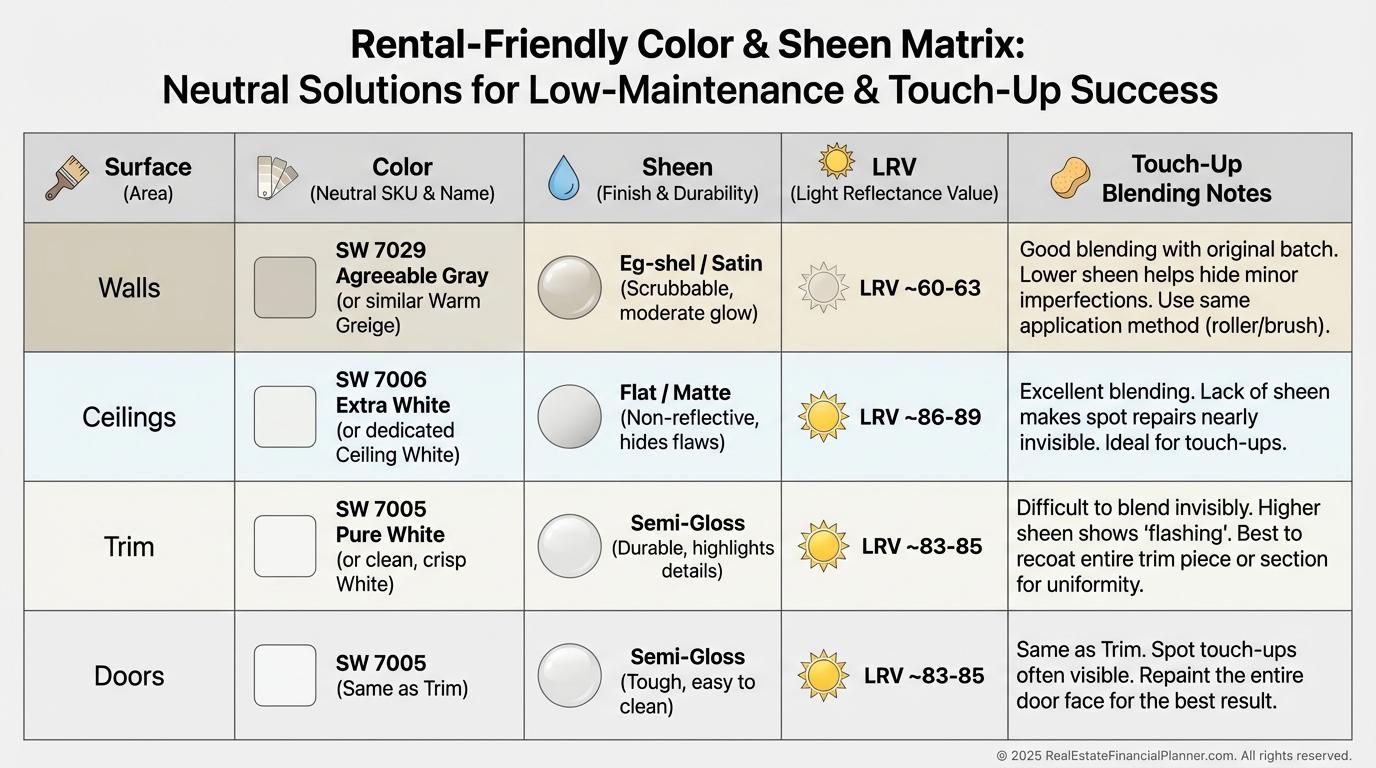
I spec a two-coat system on walls with spot-prime as needed, flat ceiling white, and semi-gloss trim/doors for cleanability.
Eggshell/satin on walls gives durability without highlighting wall defects like high-gloss will.
I require low-VOC for occupied turns and written masking protocol to protect flooring, hardware, and fixtures.
On exteriors, I require wash, scrape, sand feather edges, prime bare wood, elastomeric caulk at joints, and back-brush top coats for penetration.
Budgeting, Bids, and Cost Benchmarks
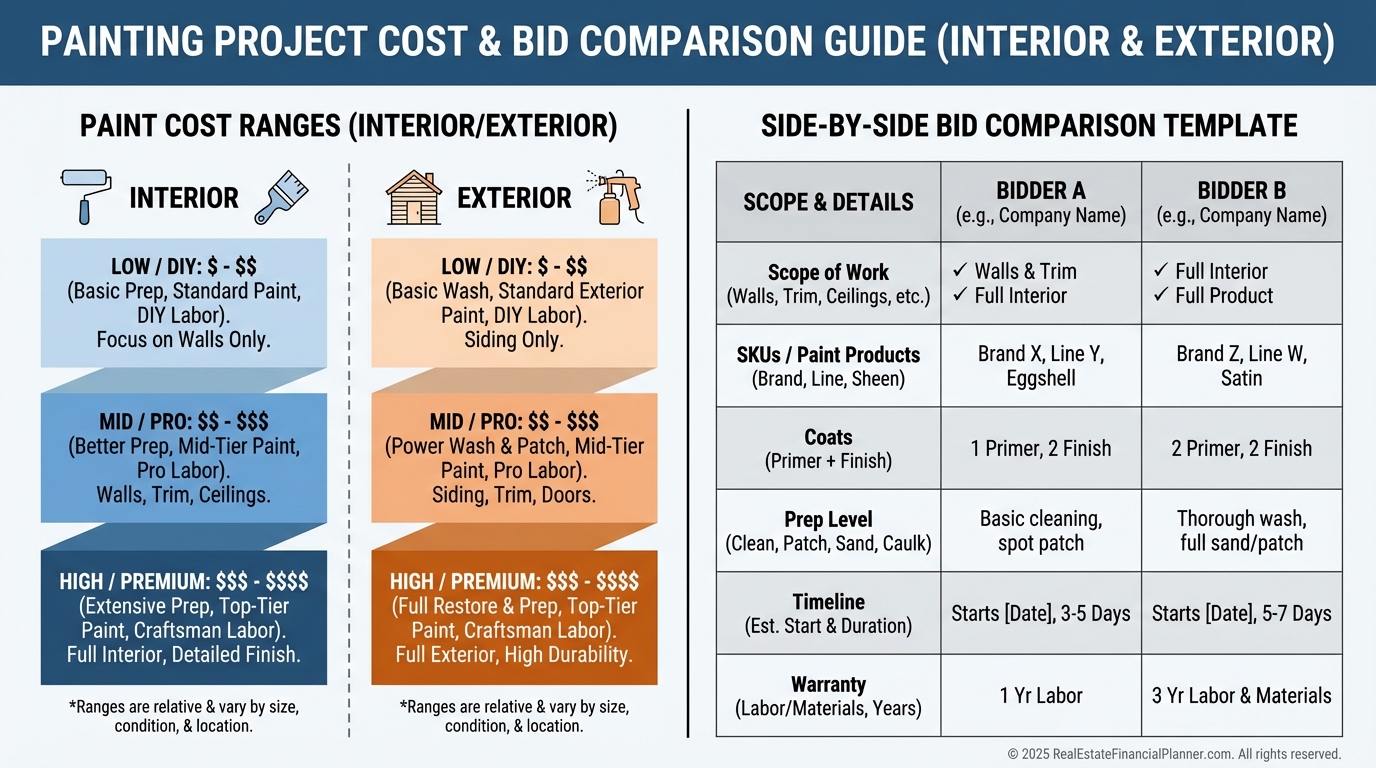
I benchmark interiors by unit size and surface condition, not just by square feet.
Light turn paint on a clean 900 sqft 2-bed can run $1,200–$1,800 in many markets, while heavy prep or nicotine can double that.
Exteriors vary wildly, but I budget $1.50–$4.00 per sqft of painted surface for labor and materials, adjusted for height and substrate.
Always collect three apples-to-apples bids with the same scope, SKUs, coat counts, and warranty.
I pay by milestone: deposit on materials, progress payment after prep inspection, and final after punchlist.
Scheduling to Minimize Vacancy
I pre-book painters two weeks before expected move-out and confirm keys the day before possession.
If I can paint and clean within 72 hours, showings start by day four, which keeps vacancy math on my side.
Weather windows matter for exteriors, so I sequence elevations by sun exposure and humidity forecasts.
When I rebuilt after bankruptcy, mastering turn scheduling was the cheapest lever to regain cash flow.
Risk Management and Compliance
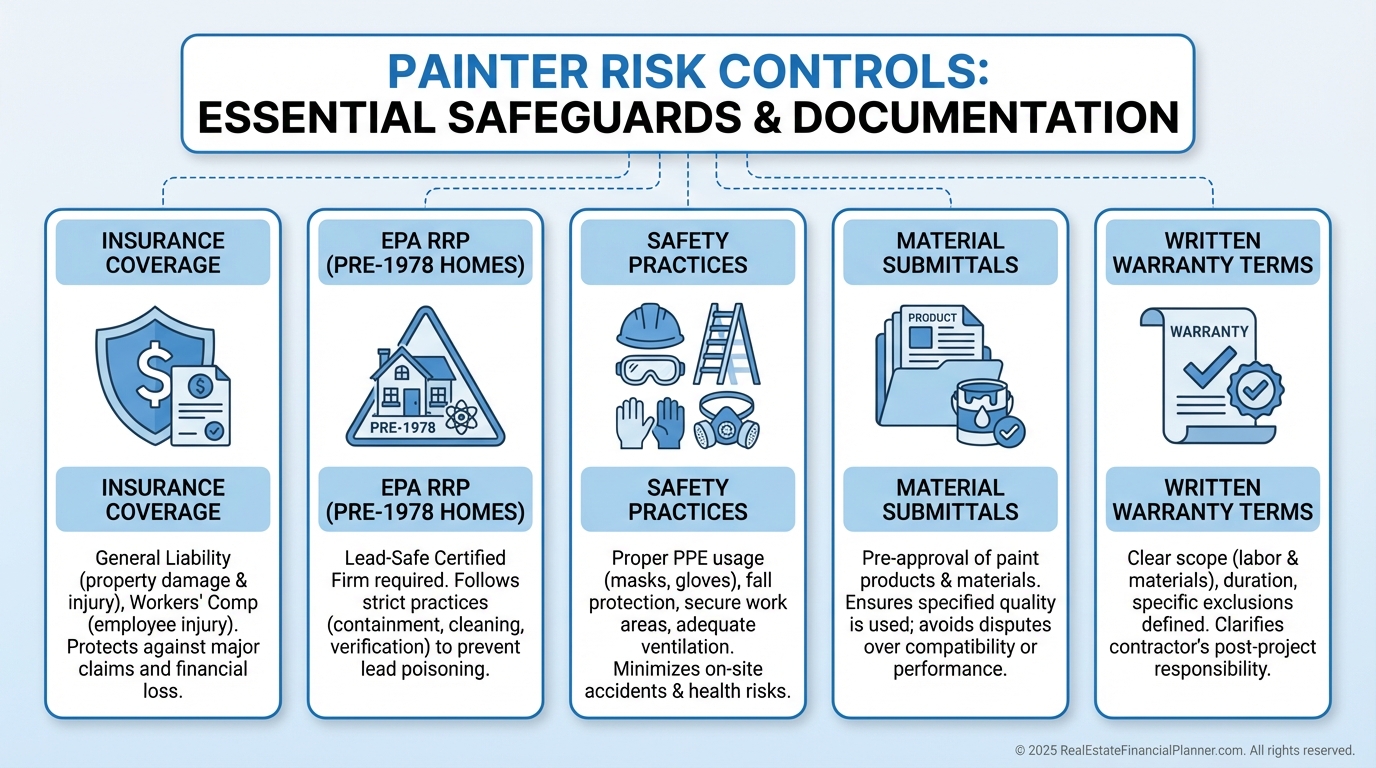
Insist on insurance: general liability and workers’ comp with you named as additional insured and a current COI.
For pre-1978 properties, require EPA RRP certification and lead-safe protocols with documentation.
Confirm ladder and lift safety and hot work permits where needed.
Get the warranty in writing: labor and materials, what voids it, and response time for failures.
Exterior Maintenance Planning and True Net Equity™
Exterior coatings are asset protection, not just cosmetics.
By resealing siding and trim on schedule, you delay costly replacements and preserve True Net Equity™.
I set a visual inspection every spring and fall and log chalking, peeling, caulk failures, and soft wood.
Then I plan partial repaints on the worst elevations first to spread cost and avoid full-envelope failures.
Accounting, Taxes, and What I Ask My CPA
Interior touch-ups and like-for-like repaints are often repairs expensed this year, improving after-tax cash flow.
Scope that improves the property beyond original condition or part of a larger rehab might be capitalized.
I document before/after photos, invoices itemized by area, and materials SKUs to support the treatment.
Ask your CPA about de minimis safe harbor and routine maintenance safe harbor for clarity before you paint.
Hiring, Managing, and Keeping Score
I test with a small unit and rate the painter on prep quality, masking discipline, schedule adherence, and touch-up blending.
I keep a punchlist template and require a blue-tape walkthrough before final payment.
Great painters photograph substrate damage and recommend fixes before it becomes your next leak.
I retain two crews so one emergency does not stall turns.
Nomad™ Angle: Live-In, Then Rent
For Nomad™ acquisitions, I paint in owner-appealing neutrals that also photograph well for future listing photos.
Before converting to a rental, I shift to the durable sheen matrix and touch-up-friendly colors to lower future turn costs.
Pro Tips from the Field
Label leftover cans by unit, room, wall, and date, and store a touch-up kit on site.
Choose colors with a high LRV in dark units to brighten photos and perceived size.
Avoid ultra-flat on walls in family rentals; use eggshell for cleanability and spot touch-ups.
Upgrade to enamel on doors and cabinets that see heavy traffic.
Quick Start Checklist
•
Standardize palette, sheens, SKUs, and a two-coat spec.
•
Build a make-ready scope with photos and milestones.
•
Pre-book painters and sequence with cleaning for a 72-hour turn.
•
Require insurance, RRP where applicable, and written warranties.
•
Track vacancy days saved and rent lift to validate ROI in your Return Quadrants™.
•
Inspect exteriors twice a year and plan partial repaints by elevation.