Showings for Real Estate Investors: Schedule, Tour, and Decide Fast Without Missing Red Flags
Learn about Showings for real estate investing.
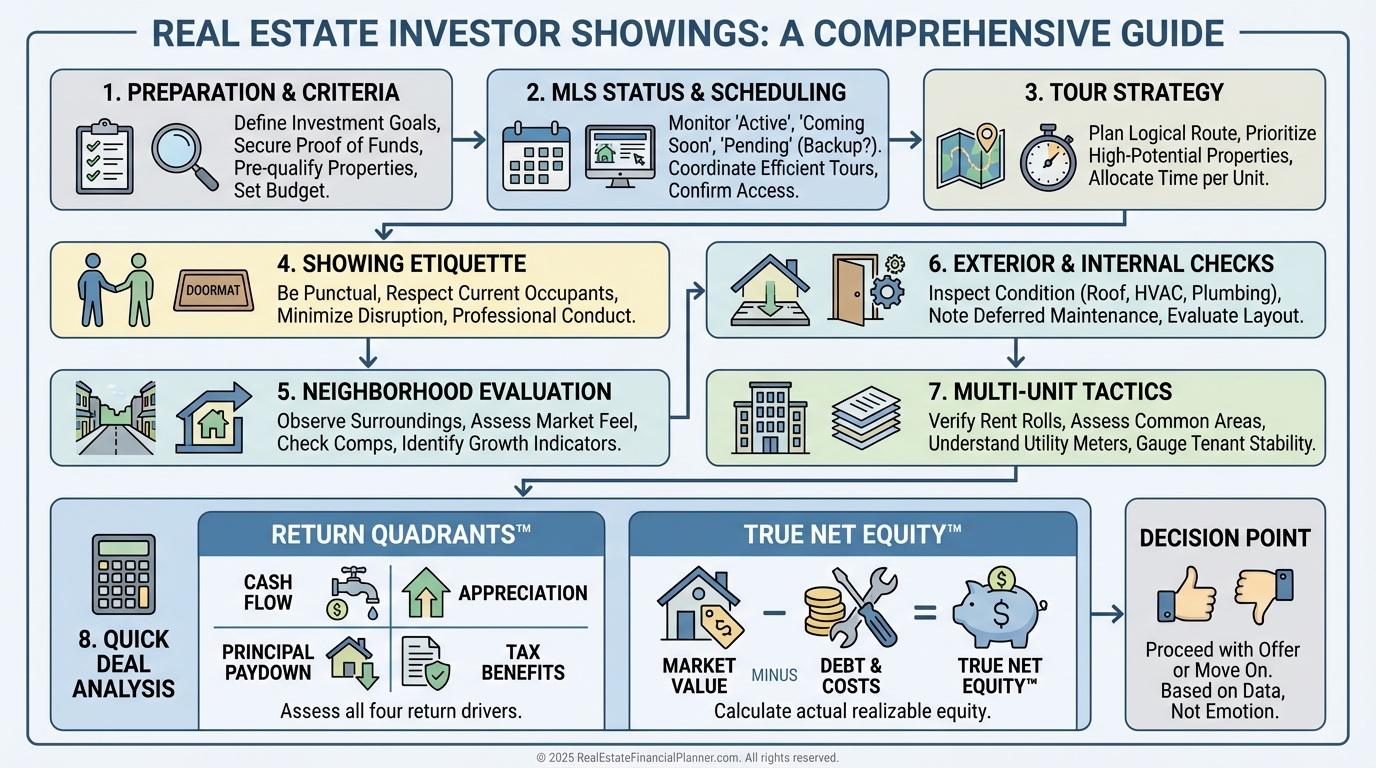
Why Showings Matter for Investors
When I help clients win good deals, the advantage usually shows up before we ever write the offer.
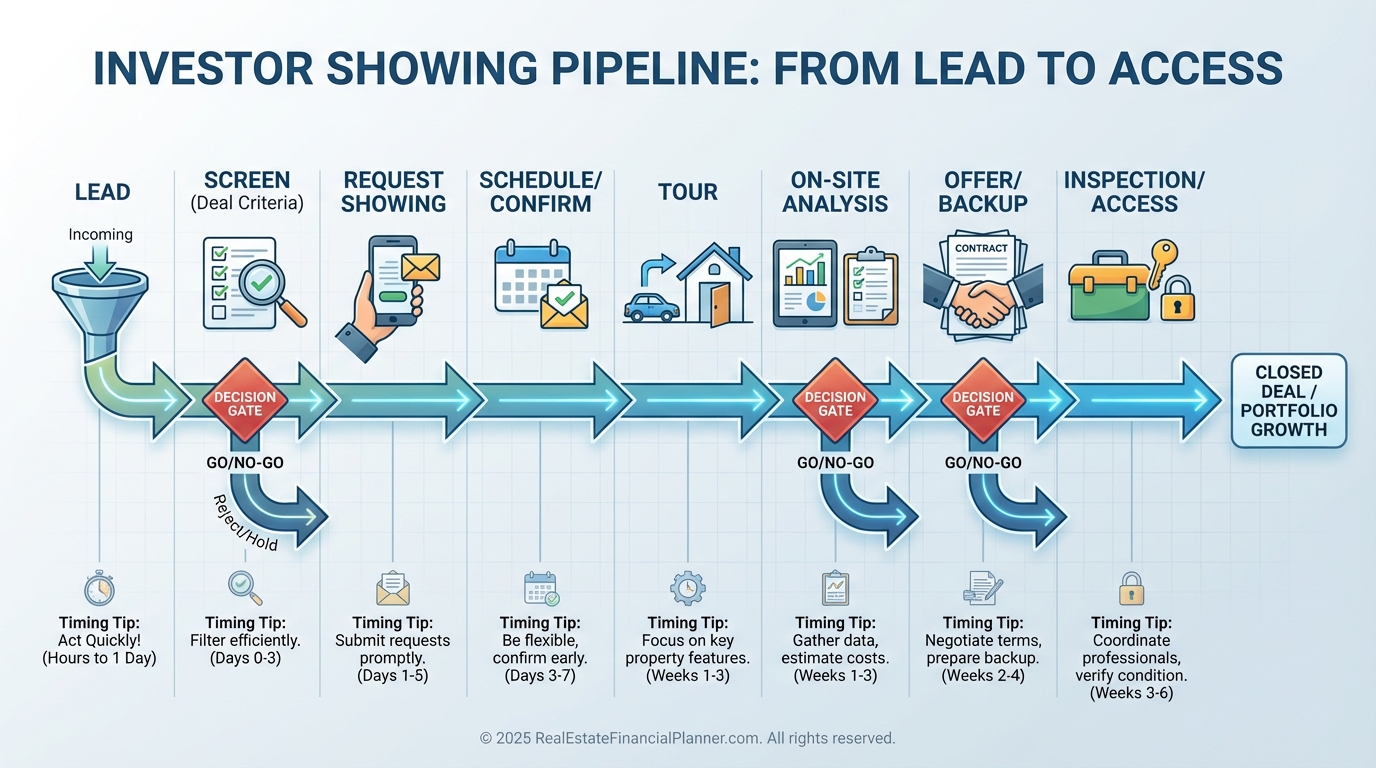
It shows up in how we screen, request, schedule, and walk showings.
Showings are where you confirm if a spreadsheet deal is a real-world deal.
Use them to validate assumptions, expose risks early, and move decisively.
Request the Showing
By the time I request a showing, I’ve already screened the property against criteria that the MLS can’t filter.
I read the remarks, zoom in on photos, research location quirks, and run a fast pass with The World’s Greatest Real Estate Deal Analysis Spreadsheet™.
If it still pencils, I have my agent request the showing immediately.
Speed is a strategy, not a personality trait.
Essentials Before You Schedule
Have two things ready before you start burning time in the car.
•
Pre-approval letter that matches your price range and strategy.
•
Liquid down payment funds and earnest money accessible now.
When I rebuilt after bankruptcy, the first thing I fixed was readiness.
Being ready is what lets you be first.
What Your Agent Needs to Schedule
Make it simple to say yes to a showing.
•
Property details: MLS number or full address.
•
Your availability: clear windows of time and some flexibility for sellers and tenants.
In fast markets, I ask clients to offer two daytime windows and one backup.
Daylight Strategy
Whenever possible, see properties during daylight.
It’s the difference between guessing and seeing.
Daylight exposes roof lines, grading, siding, and landscaping, and it reveals interior wear that nighttime lighting hides.
Visit the neighborhood again at night after your daytime tour to confirm vibes, parking, and noise.

What Happens Behind the Scenes
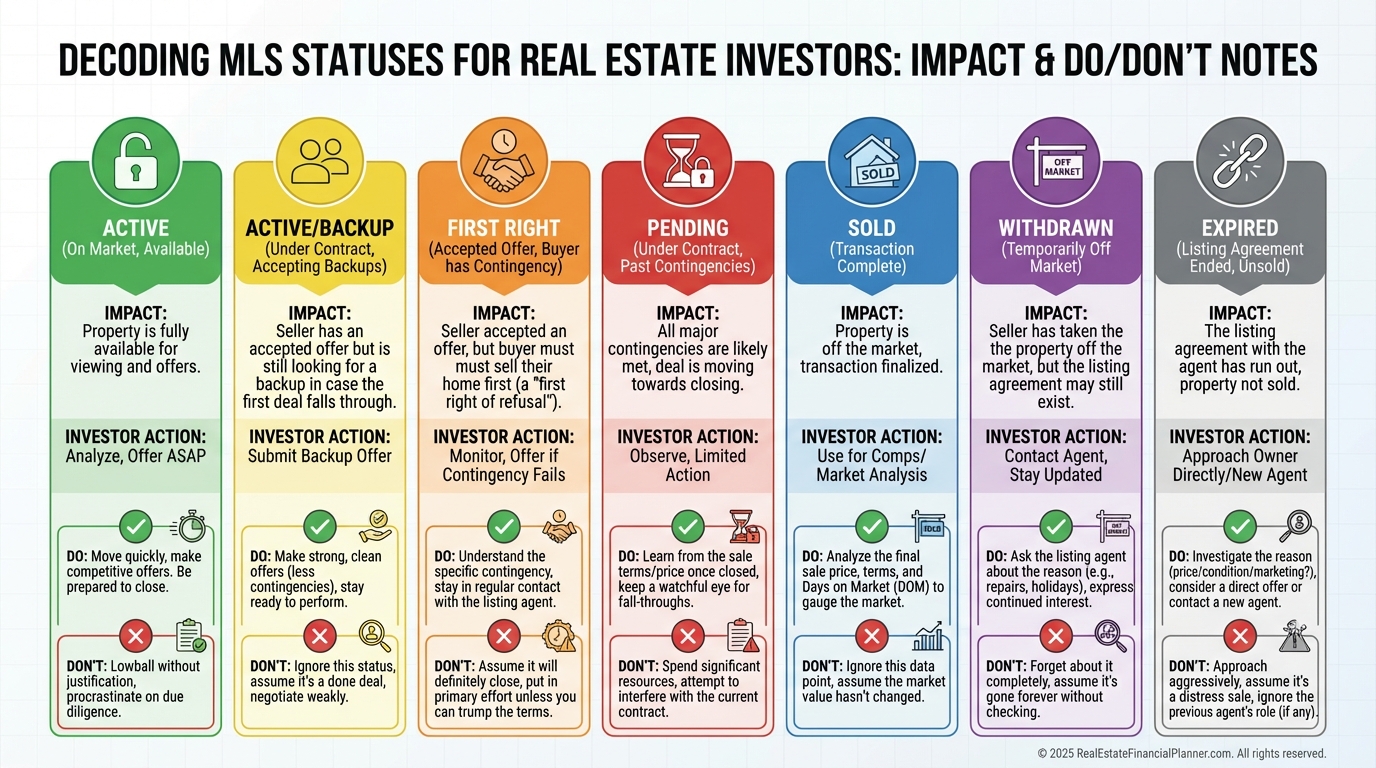
When I request a showing, my agent checks status and private broker remarks before we drive anywhere.
Active is available.
Active/Backup is under contract but accepting backups.
Pending is under contract and not accepting offers.
Sold, Withdrawn, and Expired mean you’re done unless it’s relisted.
Private remarks often reveal offer deadlines, tenant constraints, and motivation.
Your agent may also verify buyer agent compensation and confirm how your Exclusive Right-To-Buy Listing Contract handles any shortfall.
How Many Homes To See In A Day
I cap investor tours at three properties per day.
Decision fatigue ruins good judgment.
Start with A-list matches only. If none work, see B-list options another day.
Take notes on printed MLS sheets. Do not photograph the seller’s or tenant’s personal property.
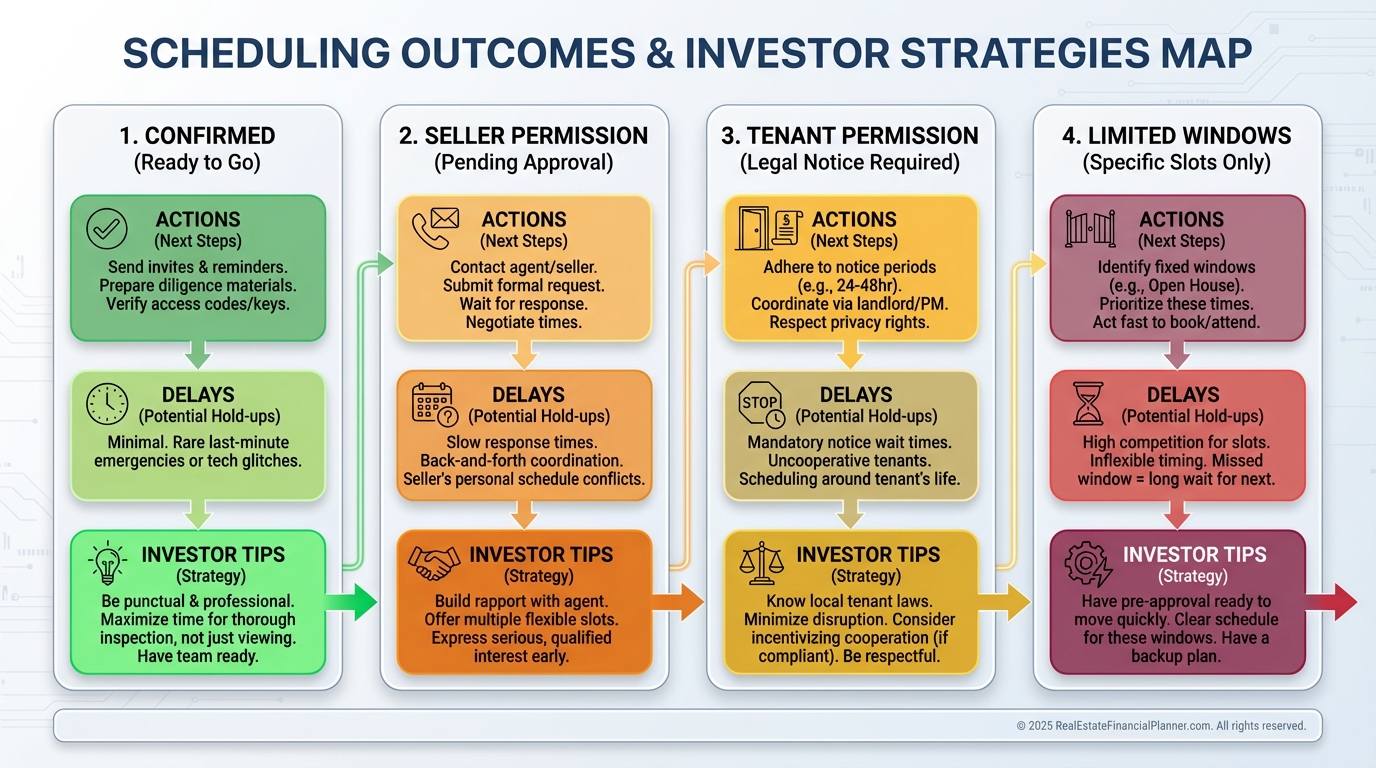
Scheduling Outcomes You’ll Encounter
When my agent calls to schedule, four things typically happen.
•
Showing confirmed: go and show.
•
Seller permission required: approve, decline, or delay.
•
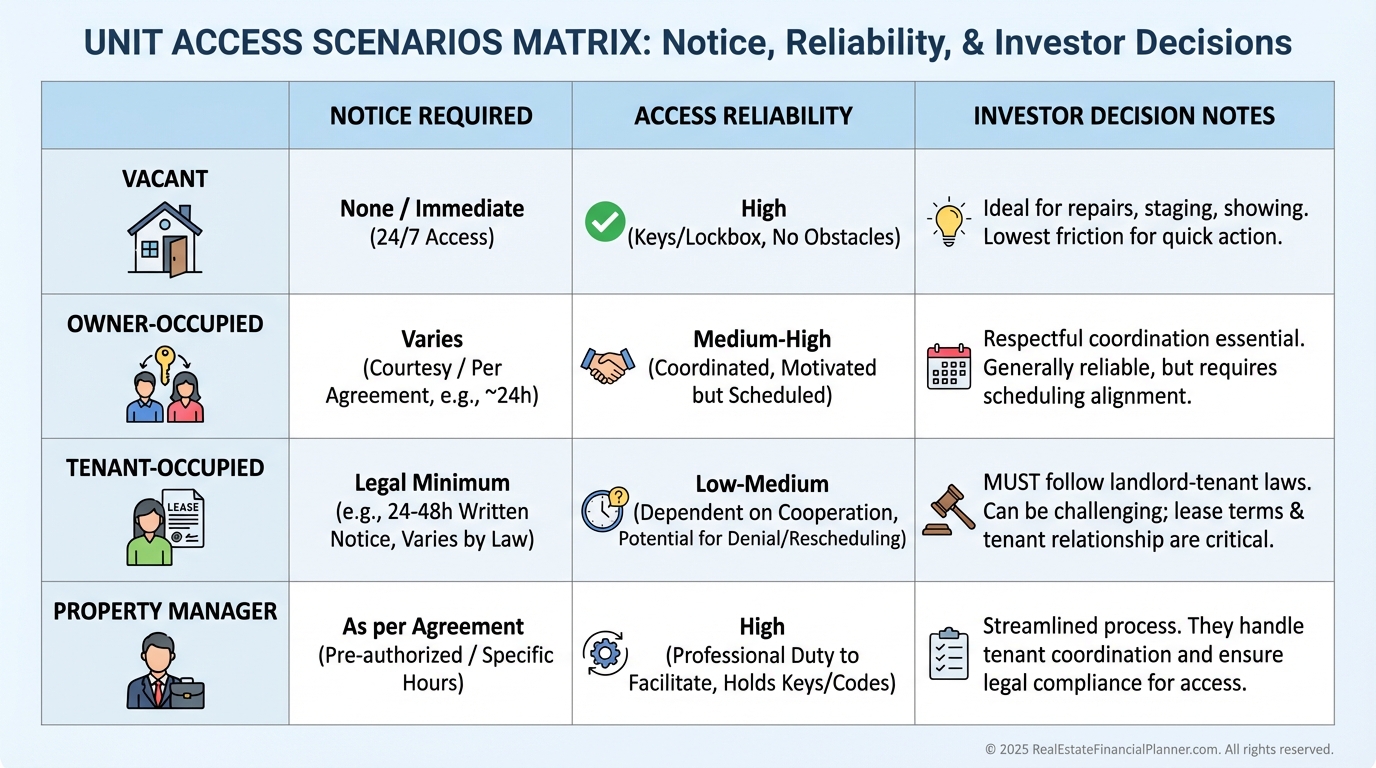
Tenant permission required: approve, decline, or delay. Expect 24-hour notice for occupied units.
•
Limited windows: specific days and times only.
Plan your route, but expect one showing to be in limbo while two are confirmed.
Gear, Arrival, and Flow On Tour
Bring a clipboard, pen, and a flashlight.
Wear shoes that slip on and off quickly. Many sellers ask you to remove them.
Meet at the first property and drive separately to stay on schedule.
Be punctual. A late start dominoes into missed doors.
When a Showing Is Confirmed
Your agent will text or email time, access notes, parking, and any special instructions.
Arrive on time, tour efficiently, and expect occasional last-minute changes.
I keep backup options ready when a tenant can’t be reached or a seller cancels.
Special Rules for Multi-Unit Properties
On multi-unit properties, accept that you won’t always see every unit on the first visit.
I often tour representative units and common areas first, then write offers contingent on access to all units during inspection.
Coordinate respectfully with tenants and property managers.
You win by being the buyer who can work within real-world access limits.
Read the MLS Like an Investor
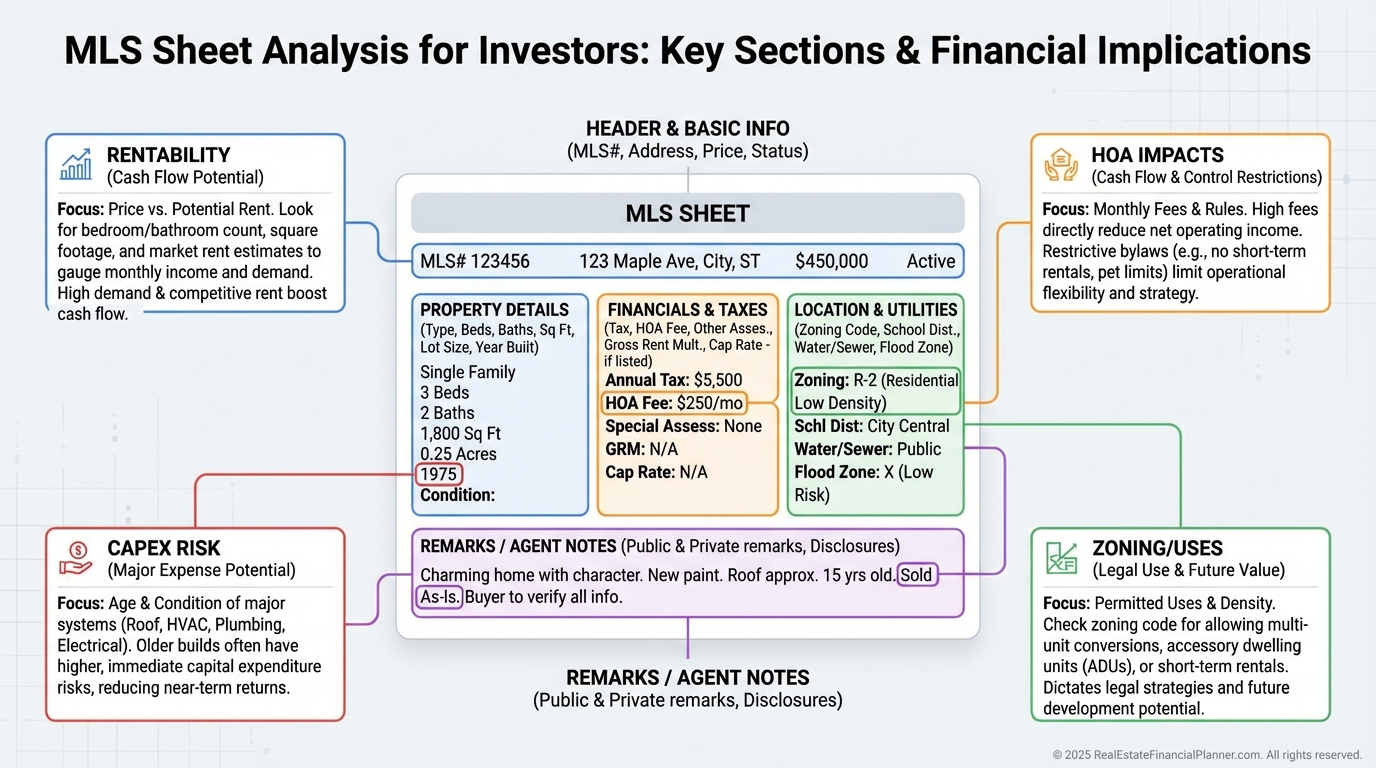
I scan MLS sheets the same way every time.
•
Property basics: address, MLS number, price, status, style, subdivision, year built, lot size.
•
Square footage: total, finished, basement, per level.
•
Rooms: bed/bath counts and sizes, features that rent well.
•
Systems: heating, cooling, energy features, water, sewer.
•
Exterior: roof type, siding, parking, outdoor space.
•
Neighborhood: schools and proximity to amenities.
•
Financial/legal: taxes, HOA dues and rules, earnest money, zoning.
•
Showing instructions: notice required, occupied or vacant.
Tie every line item back to rentability, maintenance risk, and exit options.
In-Home Etiquette: Assume You’re Recorded
Act like the seller is in the next room.
Cameras are common, and outdoor mics pick up driveway conversations.
Don’t discuss price, motivation, strategy, or personal opinions inside or near the property.
Don’t sit on furniture or browse personal items, meds, or papers.
Save all strategy talk for the car after you leave.
Navigating Crowded Showings
Hot listings can feel like open houses with back-to-back showings.
Wait your turn if another buyer is inside.
Keep your thoughts private around other agents and buyers.
Signals win and lose deals. Don’t broadcast yours.
Evaluate the Neighborhood
Great house, wrong neighborhood is still the wrong buy.
Drive the street. Note upkeep, parking, and pride of ownership.
Listen for noise, check traffic patterns, and test ingress/egress.
Confirm proximity to schools, grocery, transit, and parks.
Research crime and drive again at night.
Scan for future development that helps or hurts your rentability and exit.
Chat with neighbors if you’re serious. They know the story.
Exterior First-Pass Checklist
I always circle the property first.
Look for missing shingles, sagging lines, or aged roofs.
Check siding, paint, and any patchwork.
Scan the foundation for significant cracks or movement.
Confirm windows and doors appear sealed and functional.
Trace gutters and downspouts to see where water goes.
Assess landscaping, tree risks, and grading.
Review fencing, driveways, and walkways for hazards.
Peek at exterior HVAC units for age and damage.
Check lighting and outbuildings for deferred maintenance.
Interior Walk-Through
Inside, I move room to room in the same order every time.
Evaluate layout and flow for tenants.
Scan walls and ceilings for discoloration, cracks, or past leaks.
Check flooring condition and replacement scope.
Open windows and doors. Sticky often equals shifting.
In the kitchen, assess appliances, cabinets, and counters for rent-ready.
In baths, look under sinks and around toilets and tubs for leaks.
Test water pressure. Flush all toilets.
Listen to HVAC and glance at age indicators.
Toggle lights and test a few outlets.
Check basements and crawl spaces for moisture and odors.
Pop the attic if accessible to spot insulation and ventilation.
Confirm usable storage.
Note any persistent odors that suggest mold, pets, or chemicals.
Deciding to Offer: Quick Math On-Site
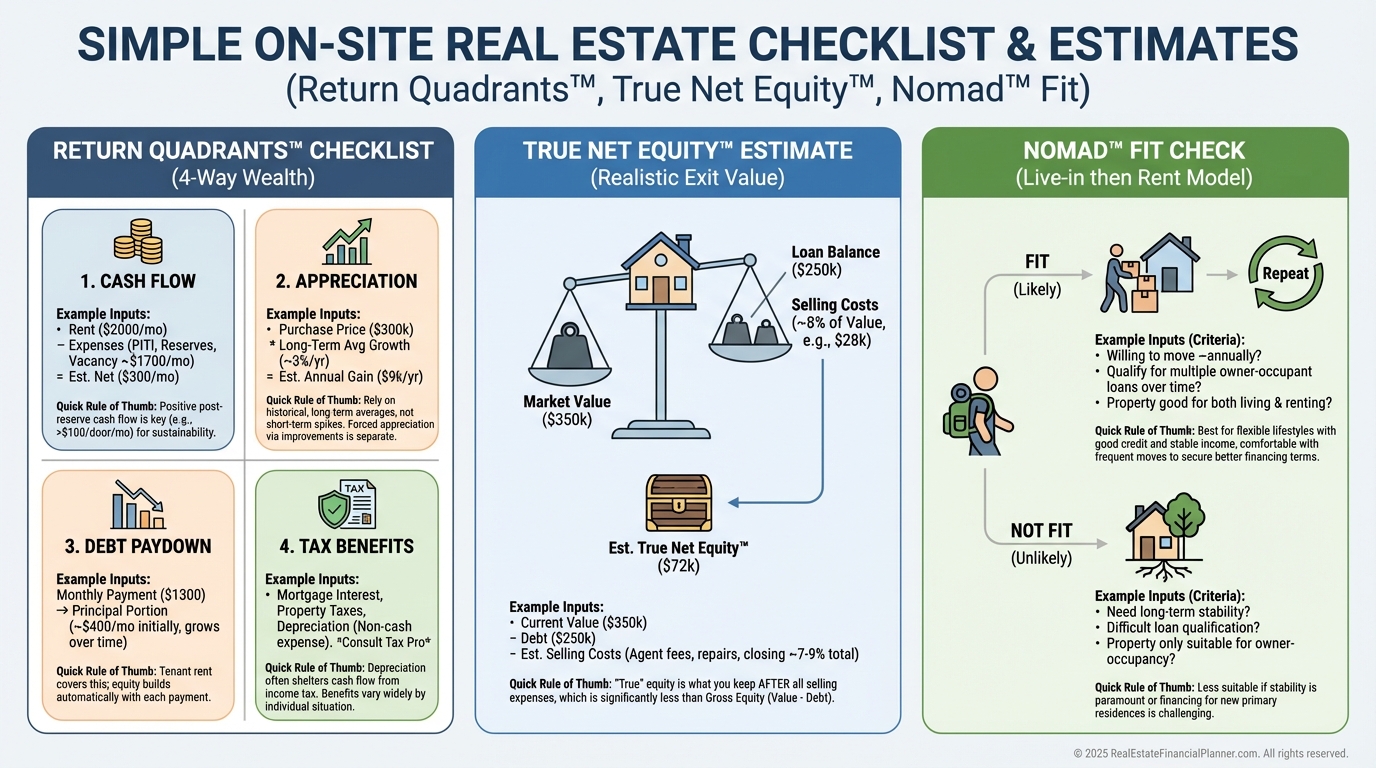
I keep a simple, fast framework for showings.
Start with conservative rent and realistic expenses, including HOA and property taxes.
Use Return Quadrants™ to sanity-check the four sources of return: cash flow, appreciation, debt paydown, and tax benefits.
Estimate True Net Equity™ by subtracting selling costs, transaction expenses, and depreciation recapture from projected equity.
If it’s a possible Nomad™ acquisition, confirm it fits owner-occupant loan rules, bedroom count, commute, and a one-year occupancy plan that turns into a strong future rental.
If the quick math looks good, move to an offer, often with an inspection window that secures full access to all units and critical areas.
After the Tour: Next Steps
If you’re in, act fast and clean.
Have terms ready, proof of funds attached, and inspection timing that respects access constraints.
If you’re not in, move on and request the next showing.
Velocity compounds your odds of finding the right deal.