Tenant Buyers: How I Structure Rent‑to‑Own Deals for Cash Flow Today and Profitable Exits Tomorrow
Learn about Tenant Buyers for real estate investing.
Why Tenant-Buyers Change the Game
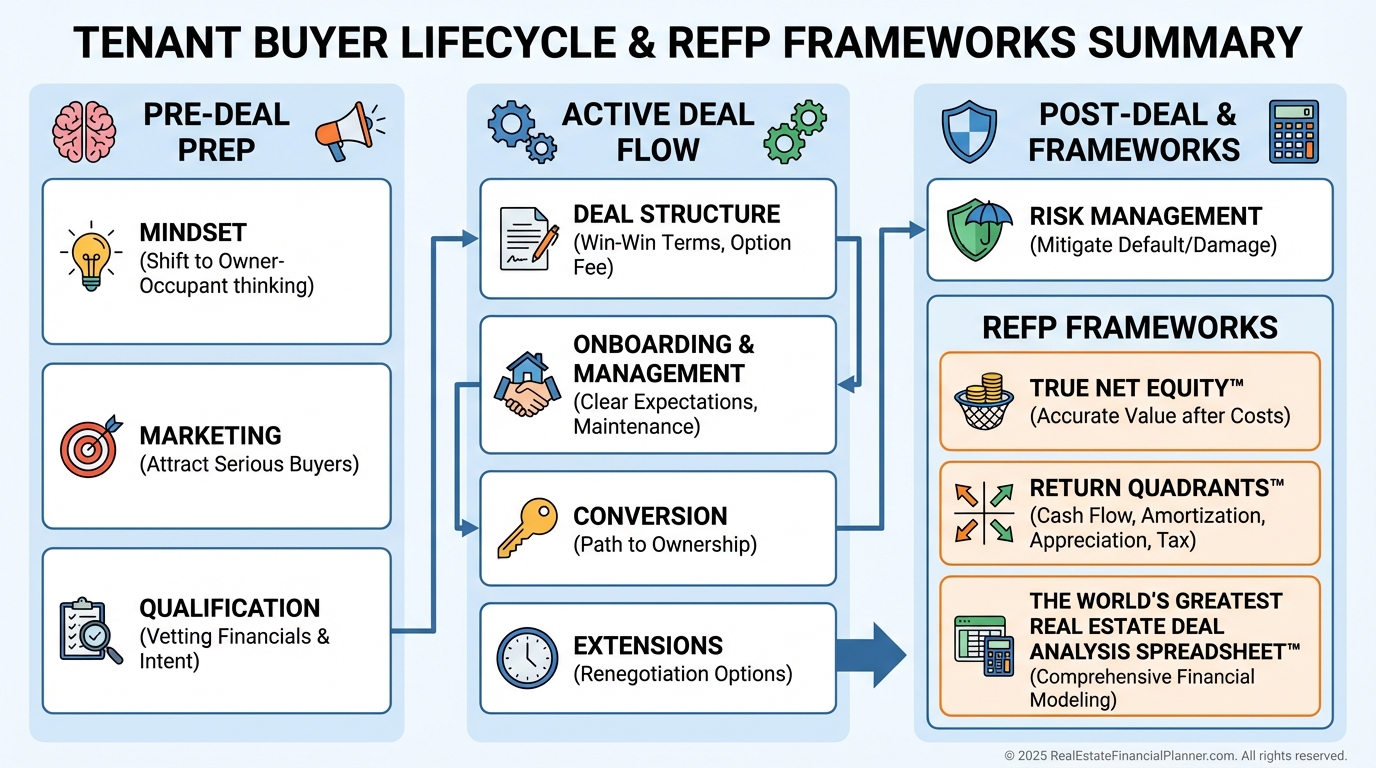
When I help clients transition from traditional rentals to lease-options, the first shift we make is mindset.
Tenant-buyers aren’t just renting; they’re rehearsing ownership.
They pay more, care more, and stay focused because they have a path to the deed.
I model these deals to deliver strong cash flow today and a high-probability exit tomorrow.
Done right, this is a win-win that compounds into referrals and repeatable systems.
The Mindset and Personas You Want
I look for people with stable income and a believable timeline to qualify.
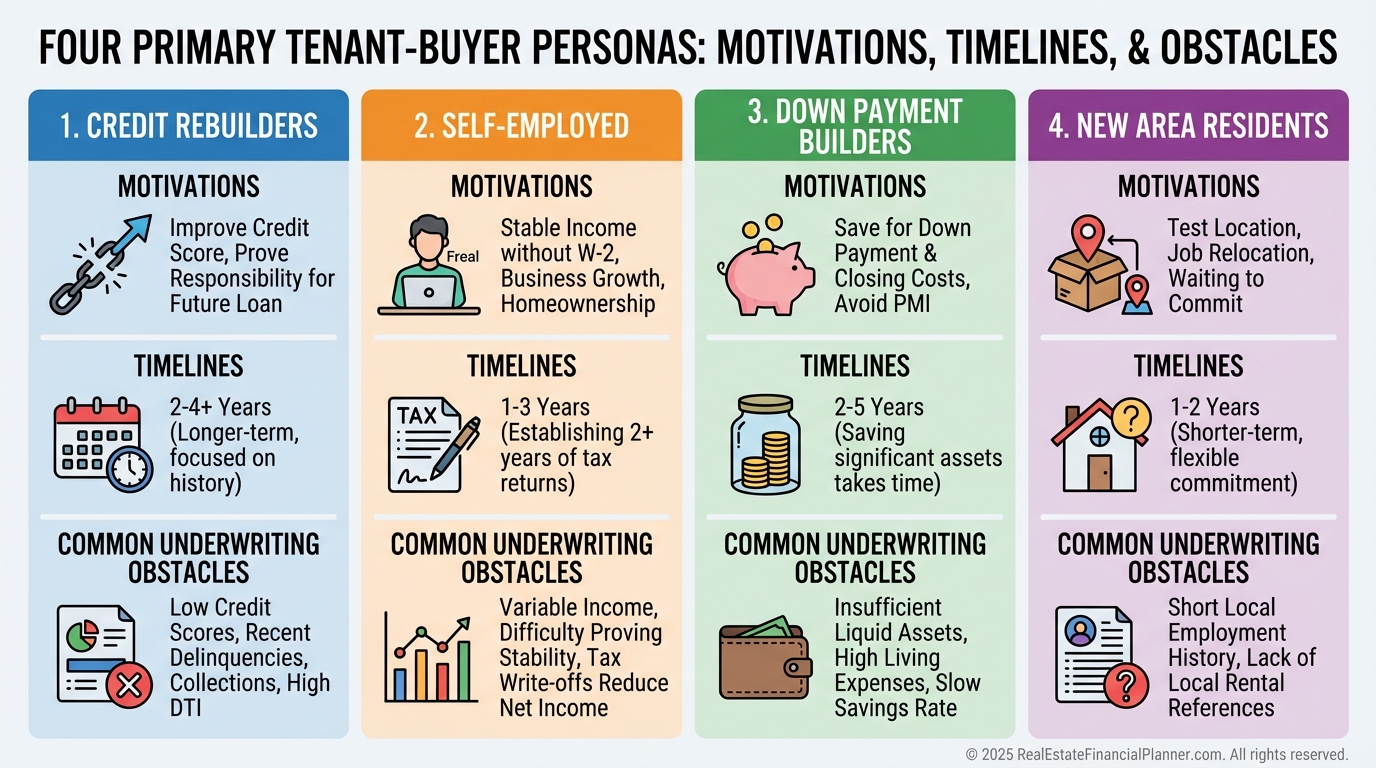
Here are the four profiles that convert most consistently in my files.
•
Credit Rebuilders: Past hiccups, current stability, clear roadmap back to approval.
•
Self-Employed: Need time to season returns or document income cleanly.
•
Down Payment Builders: Strong borrower who needs months to stack cash.
•
New Area Residents: Relocating pros who want to lock price while building local history.
The best candidates ask about schools, plan improvements, and show early lender engagement.
I avoid anyone who treats the option fee like a deposit or wants “time” without a plan.
Marketing That Attracts Serious Tenant-Buyers
When I rebuilt after a business setback, I learned the value of clarity in marketing.
You’re selling a path to ownership, not a cheap rental.
Lead with benefits they can feel and numbers they can meet.
•
•
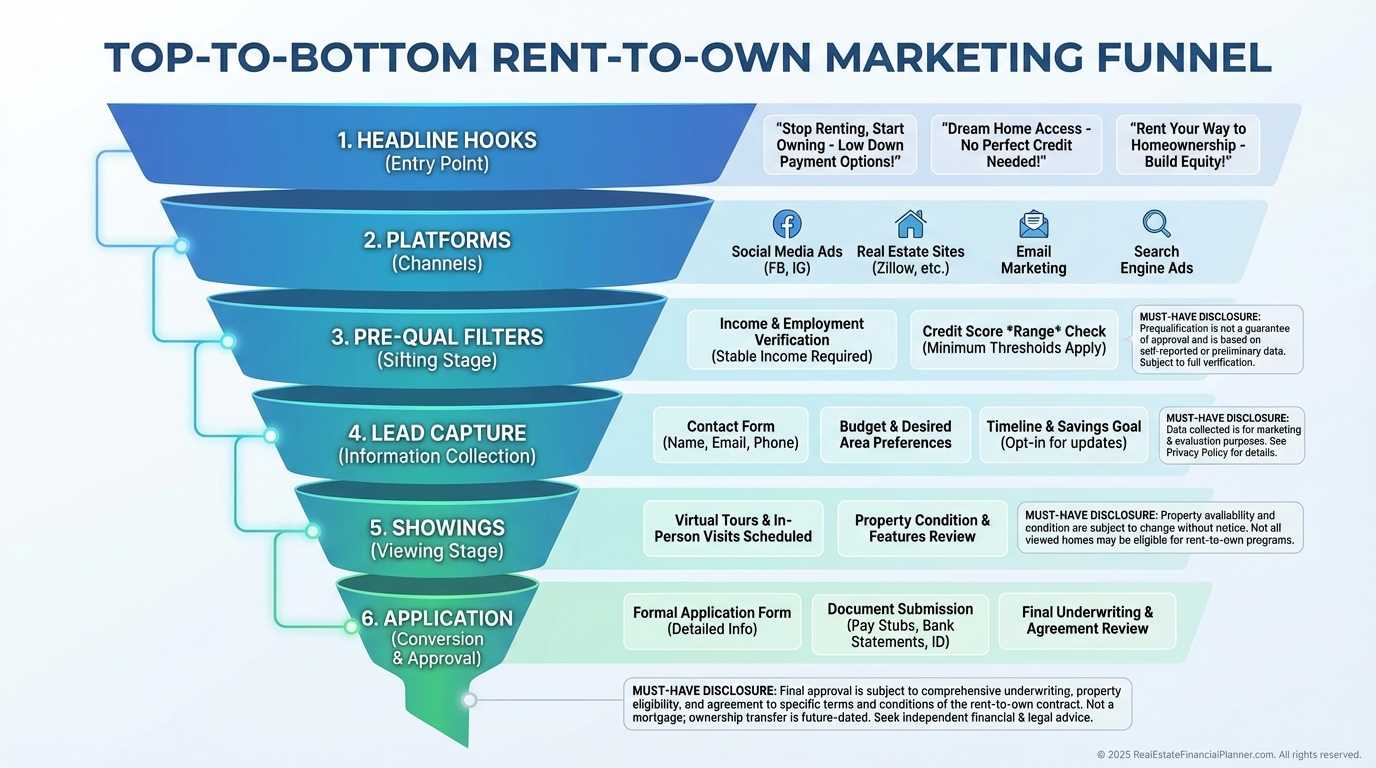
Message: Lock today’s price, build equity via credits, no bank approval needed now.
•
Filters: State option fee range and monthly payment upfront to pre-qualify.
Create scarcity by reminding prospects you only place one tenant-buyer per property.
It’s true, and it focuses the best applicants.
Qualifying for Today and Tomorrow
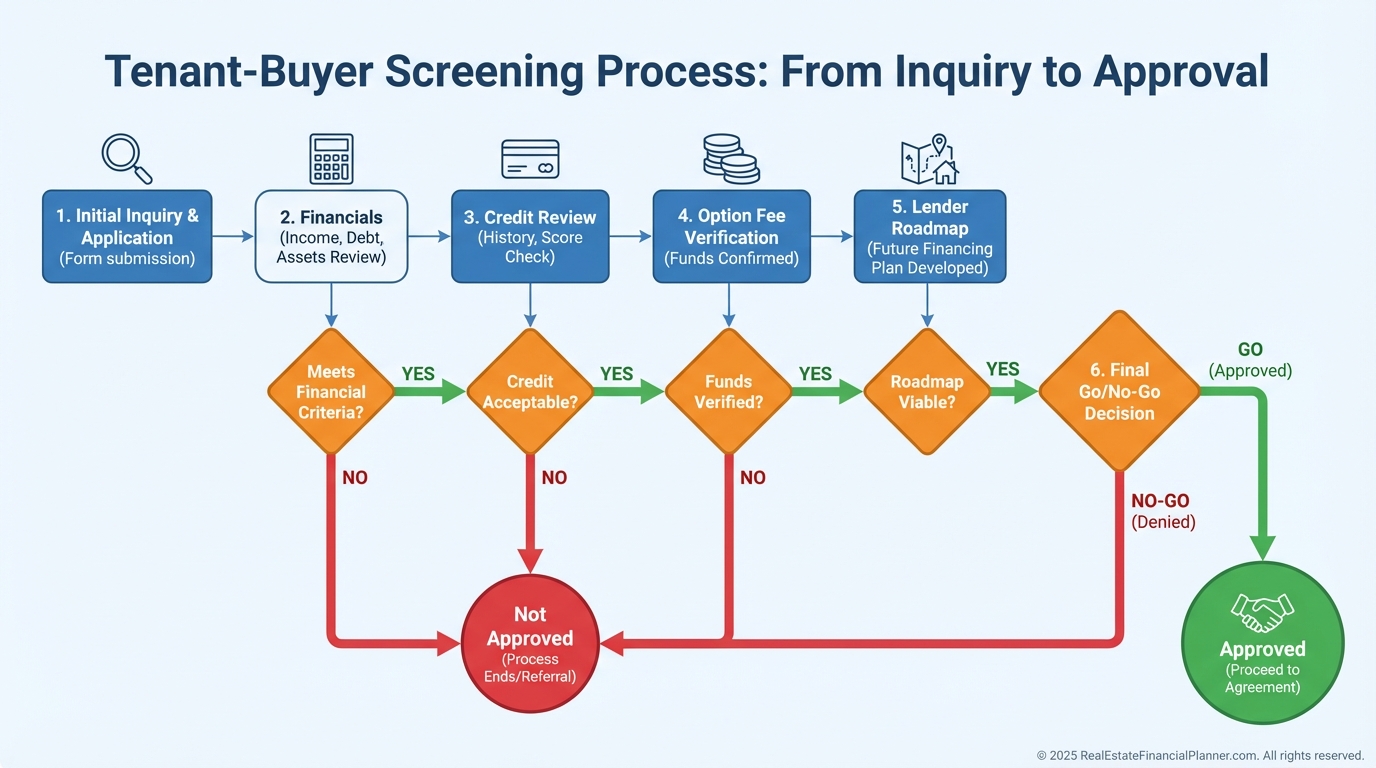
I screen tenant-buyers twice: can they pay today, and can they close tomorrow.
The second screen is where most investors miss.
•
Income: I verify at least 3.5x monthly rent, with stability and lender-acceptable sources.
•
Credit: I pull scores, identify hurdles, and map the timeline to mortgage-ready.
•
Commitment: I look for a plan, not promises—broker intro, credit action steps, savings automation.
Then I model the path in The World’s Greatest Real Estate Deal Analysis Spreadsheet™.
We set rent credits, track savings targets, and ensure the plan bridges the full down payment plus closing costs.
Structuring the Lease-Option for Profit and Performance
Great outcomes come from great structure.
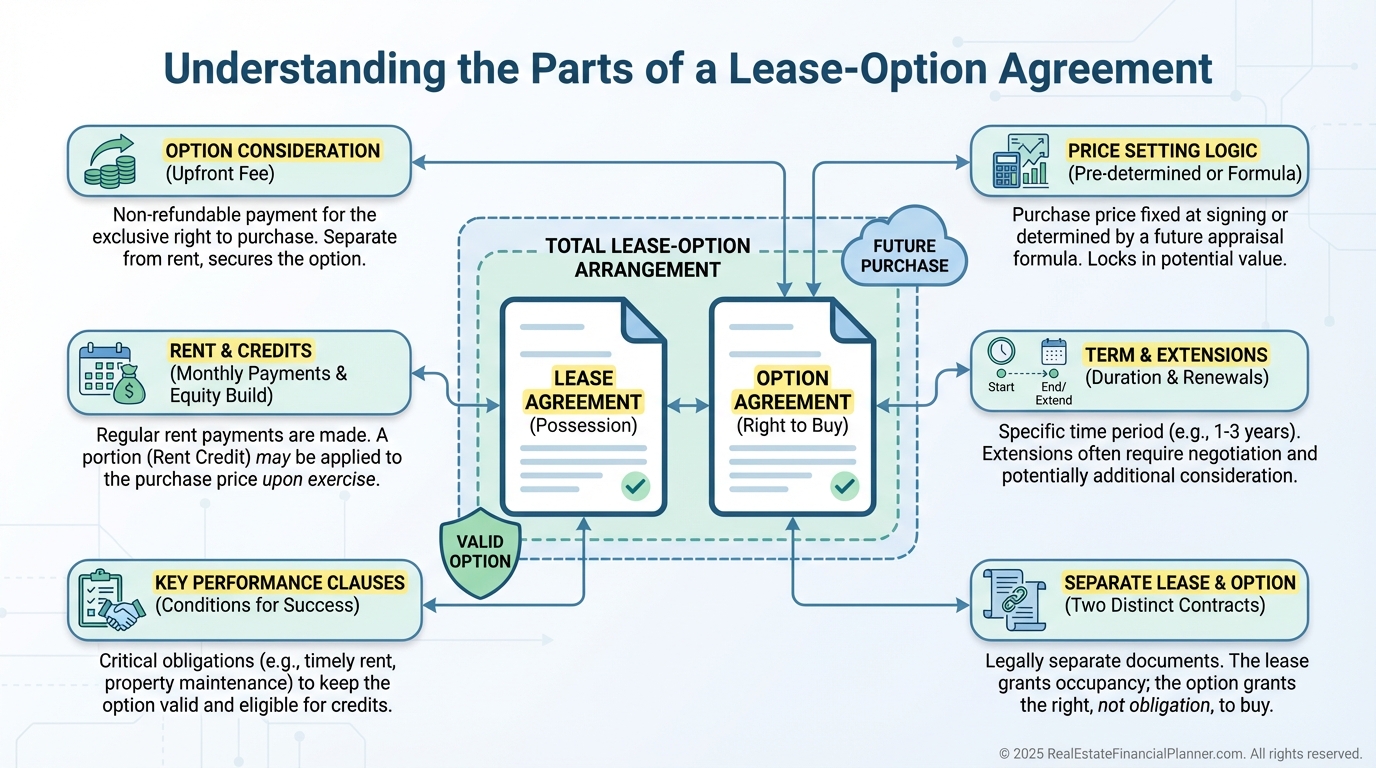
I separate the lease from the option to preserve landlord protections and clarify purchase rights.
•
Option Consideration: Usually 3–5% non-refundable, credited at closing, with higher amounts for premium homes or longer terms.
•
Purchase Price: Today’s value plus projected appreciation and risk premium, modeled in the Spreadsheet for sensitivity.
•
Rent and Credits: Rent 10–20% above market, with 25–40% credit tied to on-time payments only.
•
Term: 24–36 months with paid extensions, plus periodic lender check-ins.
I include performance standards for property care, prompt payment, and financing progress.
When appropriate, I add an acceleration clause that increases price if they need time beyond the initial term.
Using REFP Frameworks to Check the Math
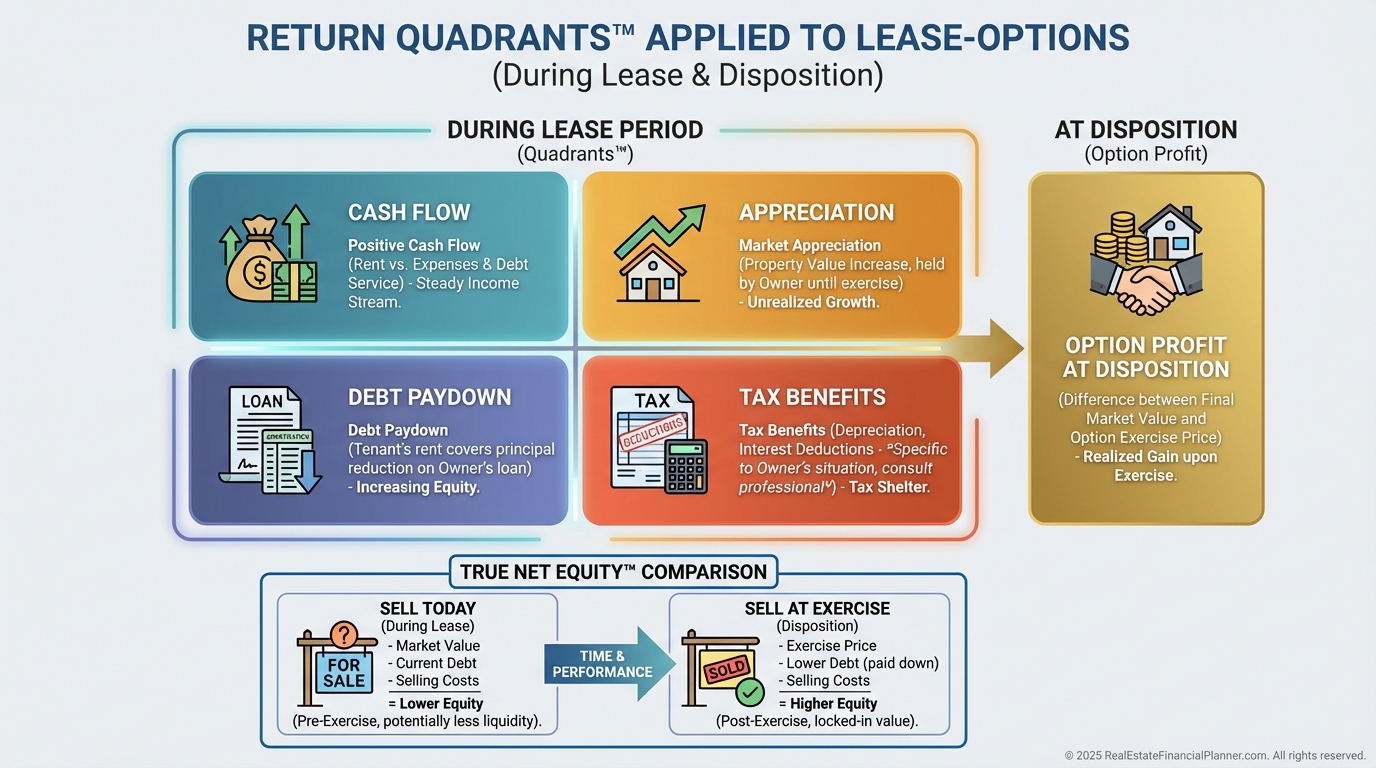
Before I sign, I run the Return Quadrants™ and True Net Equity™ snapshots at multiple points.
Return Quadrants™ shows my total return from cash flow, appreciation, debt paydown, and tax benefits across the lease term.
True Net Equity™ reminds me what I’d really net if I sold today versus at option exercise after costs, taxes, and credits.
I model best, base, and worst-case values so I’m compensated for time and risk even if the option extends.
And I sanity-check affordability using the lender’s projected ratios so the buyer can actually close.
Onboarding: The First 90 Days Decide Everything
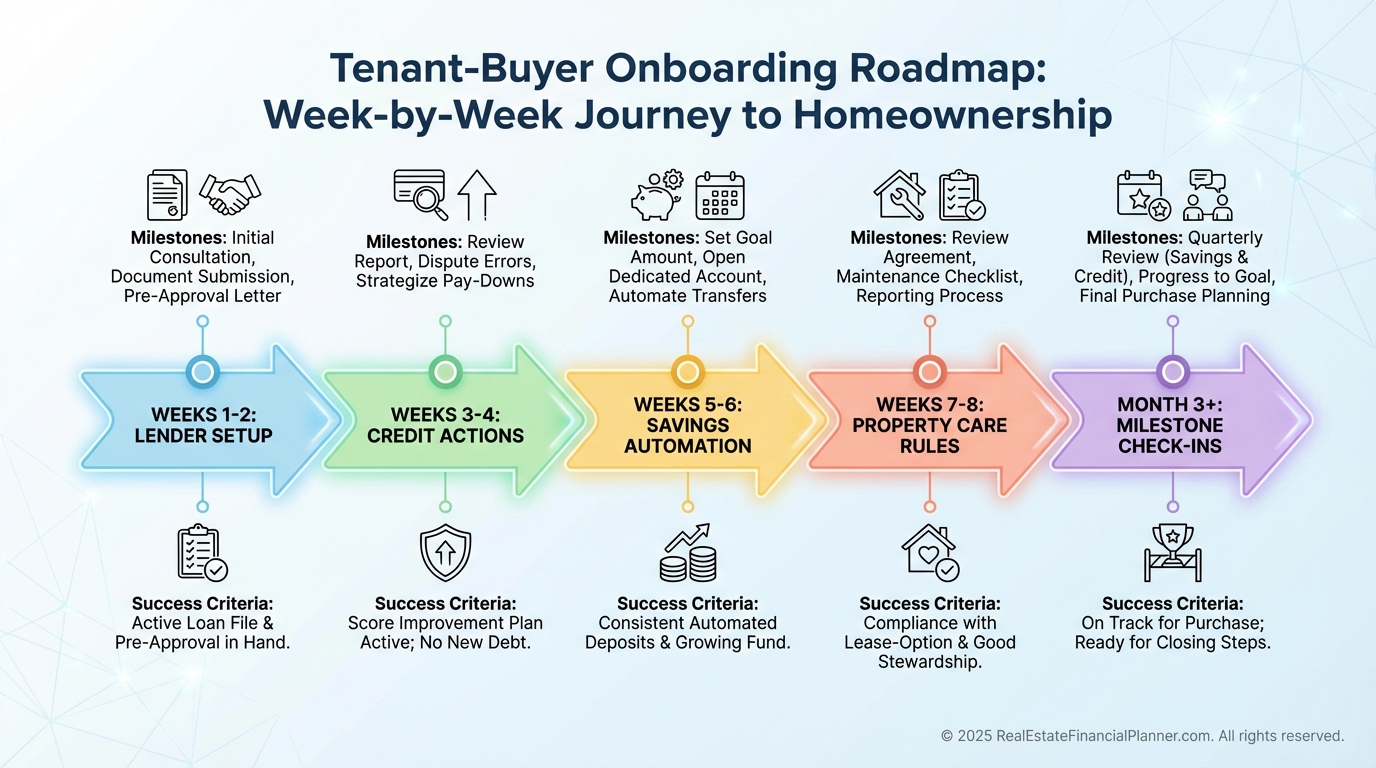
I treat onboarding like pre-approval boot camp.
We set expectations, timelines, and communication rhythms that keep momentum high.
•
Mortgage Prep: Broker intro in week one, document list started, and a readiness calendar.
•
Credit Plan: Specific actions, due dates, and monthly score checks.
•
Savings System: Automated deposits aligned with closing funds needed.
•
Property Care: What they can improve, which vendors to use, and what to call me for.
I deliver a welcome packet with timelines, contractor contacts, and the Spreadsheet printout showing their path to the closing table.
Then I schedule a 30-day review so no one drifts.
Managing Tenant-Buyers for Momentum
My management style shifts from rent collection to progress coaching.
We celebrate small wins so they stay engaged with the goal.
•
Quarterly lender check-ins and score pulls.
•
Tracking savings versus target and rent credit accumulation.
•
Approving value-add improvements and documenting sweat equity.
•
Monthly ownership tips and market updates to keep excitement high.
I also quantify their progress visually in the Spreadsheet.
A picture of growing equity beats another reminder email.
Converting Tenant-Buyers to Owners
Six months before expiry, I move from qualified to closed.
We gather docs, resolve credit noise, and get underwriting comfortable early.
I prepare the home for appraisal, document improvements, and provide comps that support price.
I use a title company that understands lease-options so every credit and fee lands exactly where it should.
And I make closing day memorable, because hard-earned ownership deserves a celebration.
When the Buyer Isn’t Ready Yet
Not every story ends on the original timeline.
What matters is how early we catch the gap and what options we provide.
I offer extensions for an additional option fee, with updated pricing that reflects market changes.
If needed, I may convert to a straight lease or help them relocate while preserving goodwill.
I document everything—check-ins, instructions, and missed milestones—so the file tells a clear, fair story.
Some who miss today become tomorrow’s best clients when their lives align.
A Quick Example to Tie It Together
On a $400,000 home, I might set a 3% option fee, rent at 15% above market, and a 36-month term.
Credits are 30% of rent for on-time payments, with a purchase price set at today’s value plus a reasonable appreciation factor.
Return Quadrants™ shows robust cash flow and debt paydown during the term, with option profit at exercise.
True Net Equity™ validates that, even after costs and credits, my net at closing exceeds my sell-today alternative.
That’s the bar I ask every deal to clear.
Final Notes from the Field
When I coach clients, I warn them not to shortcut screening, documentation, or math.
The right buyer, in the right home, on the right timeline, creates a low-drama, high-profit outcome.
Use The World’s Greatest Real Estate Deal Analysis Spreadsheet™ to illuminate the path for both sides.
Then lead like a guide, not a gatekeeper.
That’s how you create cash flow now and closings later—consistently.